




Old Dump Near Egans Creek — Could It Still Be Contributing?

We’ve been talking a lot lately about water quality in Egans Creek and the broader concerns around Amelia Island’s waterways. One question that keeps coming up in conversations is whether an old mixed-use dump closed in the early 1970s near Jasmine Street and Citrona Drive could still be leaching material into the creek.
Public records from the late 1980s confirm there was a landfill at that corner. It operated until the early 1970s. When housing was proposed on the site in 1989, a state solid-waste official reviewed it and said enough time had passed for decomposition and that it was considered safe for habitation. The city approved the project with conditions protecting itself from future claims related to the dump’s history.
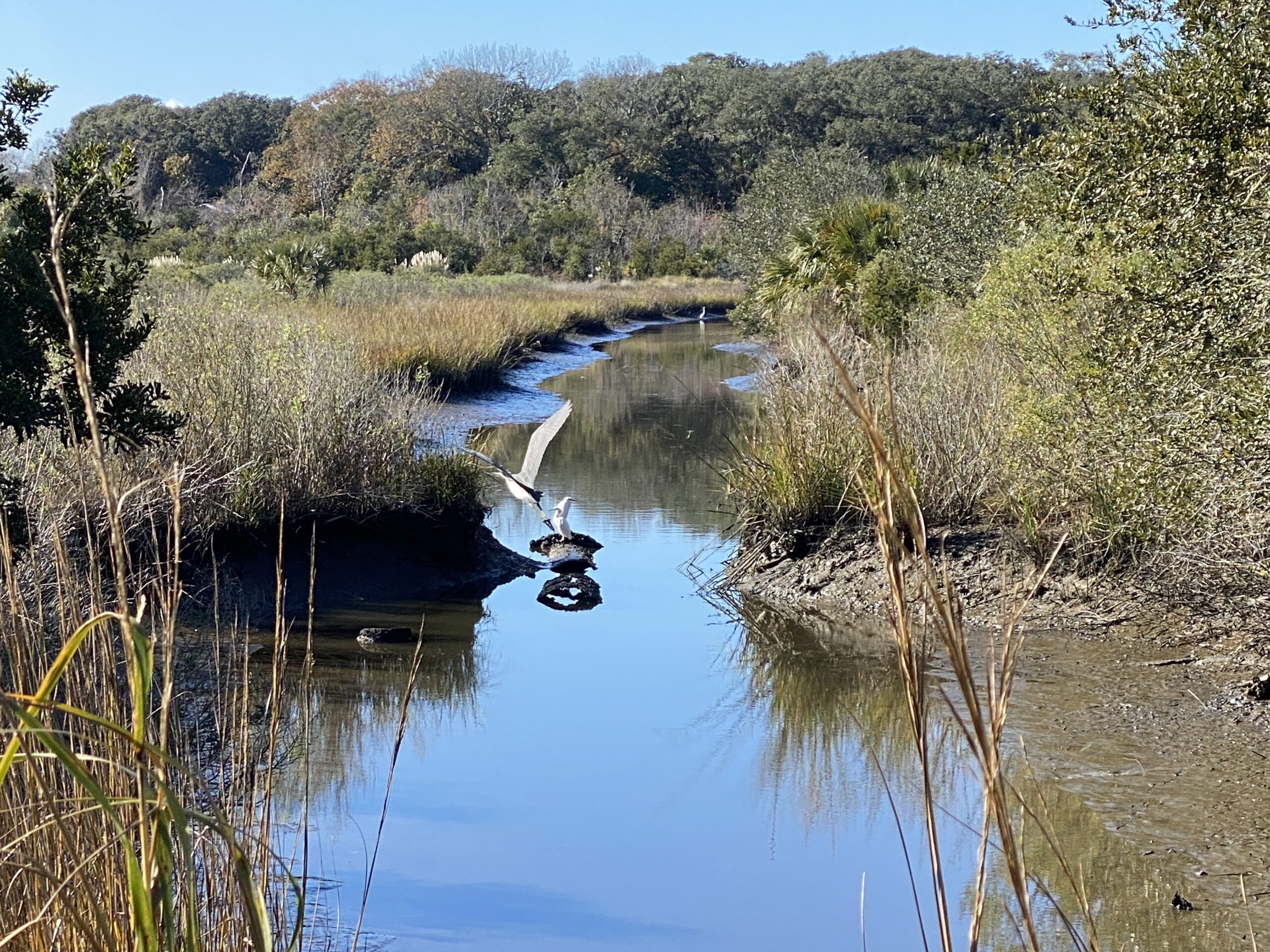
That location sits right next to the Egans Creek Greenway near the Jasmine Street access points. What makes this more interesting today is the change in hydrology. When the tidal connection was restored under Atlantic Avenue in the early 2000s as part of the salt-marsh restoration, the northern section of the Greenway began experiencing regular tidal influence again. A one-way gate was later added at Jasmine Street to limit excessive saltwater moving farther south. Those changes raised groundwater levels and increased the frequency of inundation near the old dump footprint.
Dumps from that era were rarely lined or properly capped. They typically took household garbage, construction debris, yard waste, and the kinds of household hazardous materials that weren’t tightly regulated at the time — old batteries, paint, solvents, pesticides, mercury items, and more. After fifty-plus years the organic material has mostly broken down, but residual metals, plastics, glass, and some persistent chemicals can remain.
Under the right conditions those residuals can still move. Heavy rain drives infiltration. A rising or fluctuating water table saturates what’s left. Restored tidal flow increases the chance of saturation and flushing, especially when heavy rain coincides with higher tides. What might still leach includes nutrients, certain heavy metals, residual organics, and other breakdown products. These are less likely to be the main source of the fecal bacteria problems we see in the creek, which point more clearly to septics, pet waste, and stormwater. But nutrients or metals from an old site can’t be ruled out without data.
Is it worth investigating? I think so. The site is close to an impaired waterway, the hydrology has changed since it closed, and sea-level rise plus more intense rainfall only increase the potential for movement. Targeted sampling — soil checks, a few shallow wells, and analysis for metals and nutrients — would be a practical next step. It doesn’t require digging the whole place up. It simply answers whether this legacy site is adding to the load or can be set aside as a non-factor.
Clean waterways are one of the reasons people choose to live and invest here. Understanding every plausible contributor, including older sites whose surroundings have changed, is part of good stewardship. We already know the main sources of bacteria. Checking this one carefully would give us a more complete picture.
This post was prepared with AI assistance for research, fact-checking, and initial drafting.