







Florida, Rabies and an Aggressive Raccoon
I walked out onto the porch early this morning and sat for a few minutes watching the day begin. At some point I noticed a raccoon moving along the water’s edge, then again walking the property line between our place and the neighbors. It headed into their trash area. Nothing felt particularly alarming at first.
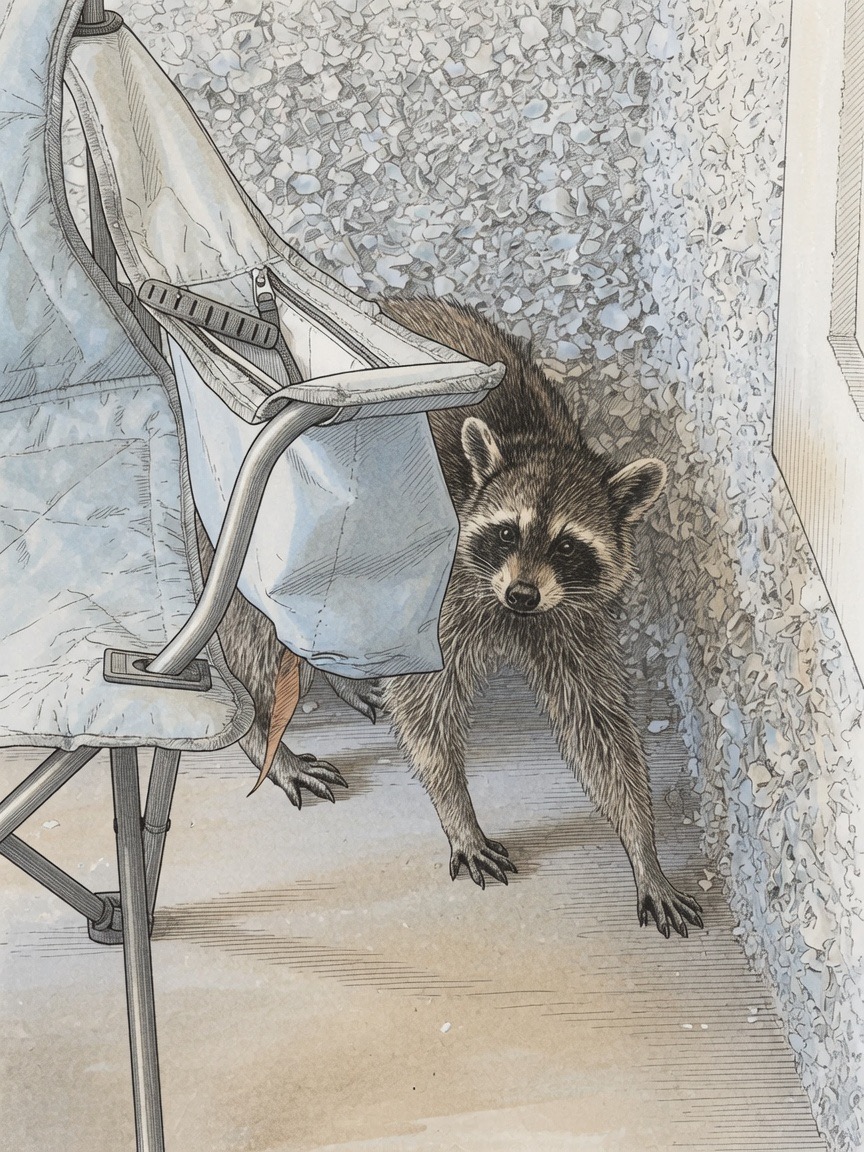
Then it started making its way toward me. I yelled to shoo it off. Instead of running, it charged in my direction before veering sideways into a recessed spot on the porch. A folding chair stood in its path, so the raccoon turned on the chair and began attacking it. That was the moment the situation shifted from ordinary wildlife sighting to something that needed attention.
I called Animal Control. The recording said they weren’t open until 11 and directed me to the Sheriff’s Office. The Sheriff’s Office told me to contact Florida Fish and Wildlife. FWC suggested calling the sheriff back for permission to shoot the animal and take it to the health department for testing. By the time all those calls were finished—roughly 45 minutes—I went inside to retrieve a small handgun. When I returned, the raccoon was gone. The chair fight was over and the animal had simply vanished.
What stayed with me was the combination of aggression toward a person and what looked like stiff or partially paralyzed hind legs. Those signs can point toward rabies. Canine distemper produces many of the same neurologic symptoms in raccoons and is more common in Florida, but the two diseases cannot be told apart by simple observation. Rabies remains a real possibility any time a raccoon shows that kind of behavior, and the only way to know for certain is laboratory testing.

Living in Nassau County means sharing space with wildlife. Most of the time that coexistence is uneventful. Moments like this one are a useful reminder to keep trash secured, avoid leaving pet food outside, and treat any daytime raccoon that approaches people or shows abnormal movement with caution. Report it. Keep kids and pets clear. In situations like this, the safest course is always to call the appropriate agencies and ask for clear direction on how to handle the animal safely and legally.
I’ll keep an eye out over the next few days. The raccoon may still be in the neighborhood. If you see one behaving the same way, the chain of calls I made is still the right path: Animal Control, Sheriff, or FWC.
