


Stormwater Fee Changes Are Coming to Fernandina Beach — What Businesses Need to Know
I’ve spent time going through the city’s Ordinance 2026-10 and the March 2026 rate study that supports it. If you own or manage commercial property here, this is worth paying attention to. Starting October 1, 2026, the way stormwater fees are calculated is changing, and the impact won’t be the same for everyone.


One of the bigger changes is the complete elimination of the previous 50% utility fee credit for properties that had on-site stormwater management facilities. That credit is gone. The typical single-family residential rate is moving from $14.36 to $16.75 per month — about a 16.7% increase. Commercial accounts start at a $33.50 monthly minimum and scale with their actual impervious area.
Previous vs. New System:
Before:
- Most commercial properties (including churches) were billed a relatively low flat rate, often around $7.18 per month.
- If the property had on-site stormwater management, it could qualify for a 50% credit, cutting the bill in half.
Now (New Rules):
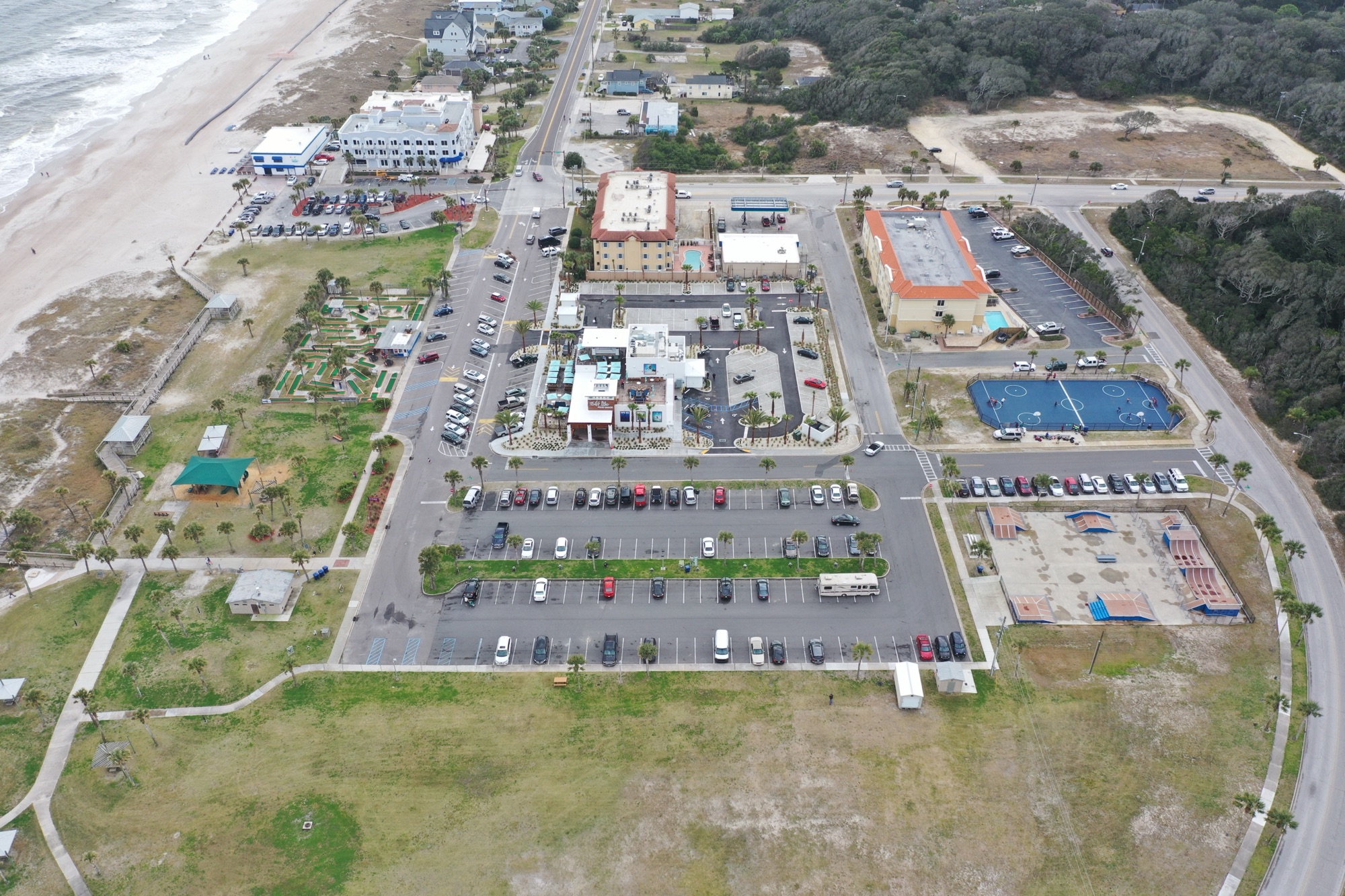
- Fees are based on actual measured impervious surface (roofs + parking lots + driveways, etc.).
- One ERU = 3,000 sq ft of impervious area.
- Commercial properties pay based on total impervious square footage, with a minimum of 2 ERUs.
- The new rate is $16.75 per ERU per month.
- The 50% credit has been completely eliminated.
Why This Hits Commercial Properties (Below…an example with a large church and parking lot) Much Harder:
Commercial properties are impacted far more than homes because they typically have much larger impervious areas (big buildings + extensive parking). Homes are protected by tiered rates and a cap, while commercial properties scale directly with their size.
Realistic Example – Large Church:
Imagine a fairly large church with:
- Main building/sanctuary: ~20,000 sq ft
- Large parking lot + drives: ~80,000 sq ft
- Total impervious surface ≈ 100,000 sq ft
Under the new rules:
- 100,000 sq ft ÷ 3,000 = 33.3 ERUs (rounded down to 33 ERUs)
- Monthly fee = 33 × $16.75 = approximately $553 per month
- Annual cost ≈ $6,630
Before, this same church was likely paying around $7.18 per month (or even less with the 50% credit).
That’s an increase from roughly $86 per year to over $6,600 per year — almost 77 times higher in this example.
The combination of moving to measured impervious area + losing the 50% on-site stormwater credit creates very large increases for properties like churches, medical facilities, schools, and retail centers that have significant parking and building footprints.
According to the rate study’s comparison, even after the increase, Fernandina Beach’s typical residential rate remains competitive with other coastal Florida utilities. Many of those communities charge similar or higher amounts depending on their own infrastructure demands.
The city’s stated reasons are laid out clearly in the rate study. They project a revenue shortfall starting in FY 2027 under current rates. The plan includes expanding the maintenance program (roughly $343,000 annually for a dedicated crew and resiliency staffing), funding about $9.9 million in capital improvements over six years (drainage conveyance work, pipe rehabilitation, culvert repairs, and equipment), and creating a new Renewal and Replacement Fund. These needs come from the Stormwater Master Plan. The study does not frame this as an emergency caused by past cost overruns — it presents it as
forward-looking investment to keep the system functioning and resilient in a coastal environment.
What concerns me is how this landed for many of the businesses that will actually pay more. The city estimates 1,051 commercial accounts will see increases. Some will be modest. Others — especially larger properties or those that previously received the 50% credit — will see bigger jumps. A spreadsheet some local business owners have been sharing shows the range of impacts, and it tracks with the new methodology.
The rate study and ordinance followed the normal public process, including a workshop in April. But for many of the people writing the checks, this still feels abrupt. There wasn’t widespread direct outreach to commercial utility customers beyond the standard noticing requirements. A lot of business owners are only now seeing what their new bills could look like.
Infrastructure funding is necessary. Coastal communities can’t afford to let stormwater systems fall behind. At the same time, when costs shift significantly for over a thousand commercial accounts, clearer and more direct communication would have helped. The appeals process exists for measurement disputes, and there’s still time for public comment as the ordinance moves through commission.
If you have commercial property here, it’s worth pulling your impervious numbers and running the calculation so you know what to expect. The documents are public, and the math is straightforward once you see how ERUs are assigned.
What the new stormwater fees are intended to fund:
According to the City’s March 2026 rate study, the proposed increase in stormwater fees is meant to address projected shortfalls and support the following:
- Expanded maintenance — Adding a dedicated stormwater field crew and partial funding for a Chief Resiliency Officer. This is estimated to cost about $343,000 per year starting in FY 2027, with the goal of improving routine inspections, maintenance, repairs, and response to localized flooding.
- Capital improvements — Approximately $9.9 million over six years (FY 2026–2031) for drainage conveyance improvements, pipe rehabilitation, culvert repairs, and equipment purchases. These projects were identified through the city’s Stormwater Master Plan.
- Renewal and Replacement Fund — Establishing a dedicated reserve to help pay for future infrastructure rehabilitation and equipment replacement over time.
The rate study does not list specific street-by-street projects or tie the increase to any particular past project overruns. It frames the needs as ongoing maintenance expansion and capital work needed to maintain the stormwater system in a coastal community.
More detailed project lists may be available in the full Stormwater Master Plan documents.
This post was prepared with AI assistance for research, fact-checking, and initial drafting.