




License Plate Readers in Nassau County: How Flock Cameras Work, What They Cost, and Why Florida Is Pulling Them Off State Roads
Florida’s Department of Transportation has revoked permits for automated license plate readers in state highway rights-of-way and given agencies 30 days to remove them. The Nassau County Sheriff’s Office operates 34 Flock Safety cameras covered by that order. Jacksonville Sheriff T.K. Waters went further and discontinued LPR use throughout Duval County. Before the poles come down, the technology, the documented cases, and the backlash deserve a clear look.
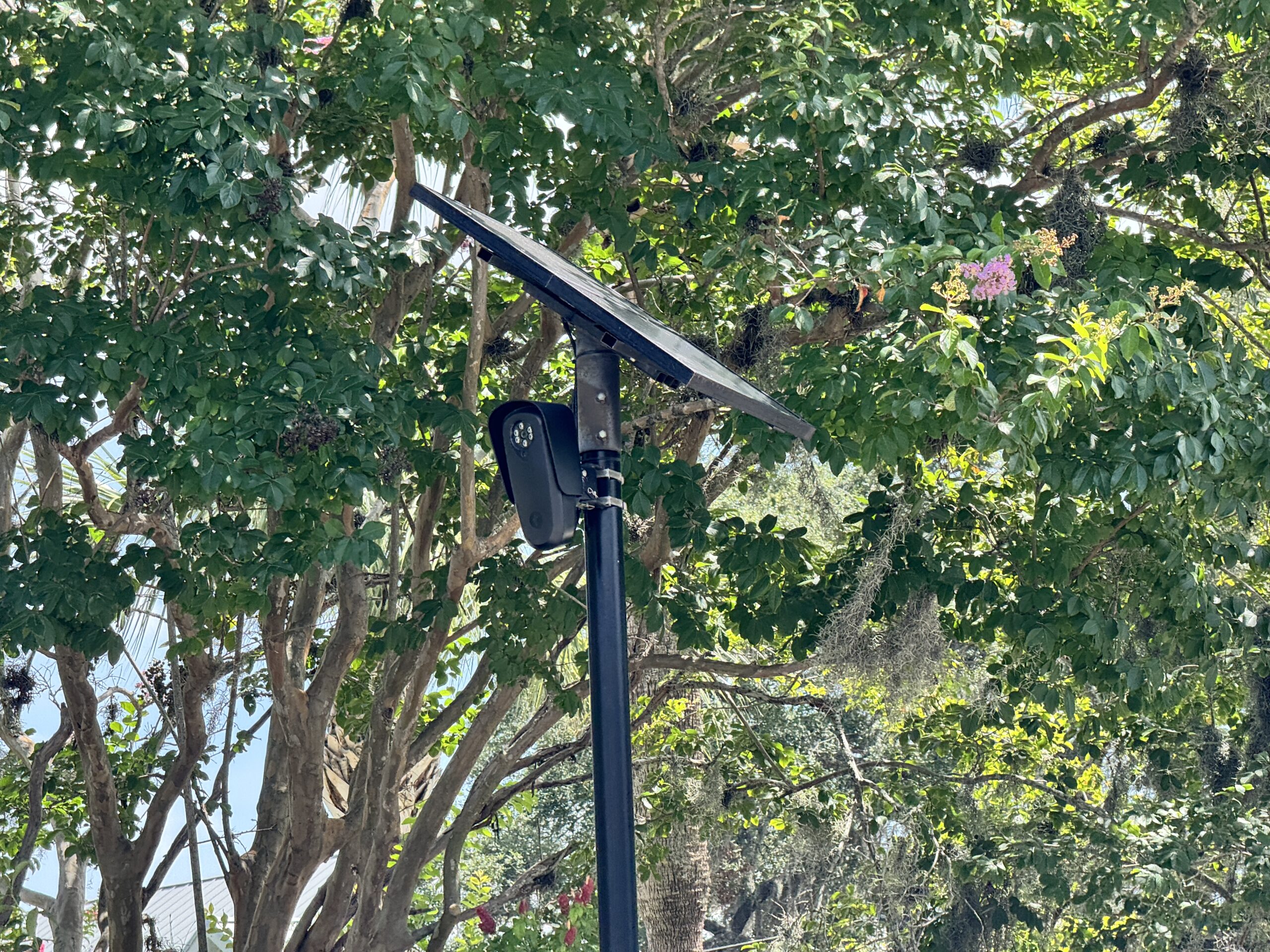
A Flock camera is an automated license plate reader, not a ticket camera and not facial recognition. It photographs vehicles in public view and turns each pass into a searchable record: plate, time, location, and visible traits such as color and body style. It does not identify the driver. Agencies can get an alert when a plate matches a stolen vehicle, a wanted person, or a missing-person case, or they can search later from a partial tag or description. The agency owns the data. Access is supposed to require a documented reason and leave an audit trail. Flock has moved its recommended default retention toward seven days unless a record is held as evidence.
Nassau County has two public examples. On October 10, 2025, an armed suspect robbed First Federal Bank in Yulee and left in a Dodge Ram. Flock data helped map that truck from Yulee through Jesup, Georgia, to Pembroke, where Marshall Foskey, 66, was arrested on October 20. Most of the money was recovered. In January 2026, a dump trailer and about $19,370 in baseball and construction equipment were stolen from West Nassau High. Flock identified the vehicle towing the trailer. In July, Bradford County Flock units flagged the same trailer. Brian Michael Moore, Joshua Edward Teel, and Ashley Marie Crockett were arrested.
Jacksonville’s record is larger and, in the last three months, more visible. The Jacksonville Sheriff’s Office has said that since 2024 its LPRs helped with 15 murders, 17 kidnappings, six forcible sex offenses, nearly 100 shootings, and 172 missing-person cases. It operated 141 fixed readers and nine mobile units.
In mid-July, JSO credited license plate readers with helping locate a 13-year-old girl taken from a home in Baxley, Georgia, and brought more than 130 miles to the Scottish Inn on Philips Highway. On July 16, JSO SWAT, the FBI, and the Georgia Bureau of Investigation found her. Jonathon Kelly, 42, tried to flee, crashed into the motel, and was arrested with Giovannie Carter, 32, the girl’s biological mother, who did not have legal custody. JSO also said an LPR helped officers quickly find an elderly man with dementia who had gone missing.
In late June and July, Flock units were both the target and the tool. After cameras in Atlantic Beach, Neptune Beach, and Jacksonville Beach were spray-painted, investigators used remaining readers to track a red Mazda hatchback. A 19-year-old Jacksonville Beach man, Isiah Blair, was charged with vandalizing multiple cameras. Police said he told them he did not trust license plate readers.
Those cases explain the cost argument. Solar poles cover chokepoints that would otherwise require more patrol hours. Nassau’s reported figure was about $98,000 a year for 34 cameras. A working paper on 216 agencies that deployed fixed readers found about an 11 percent drop in motor-vehicle theft in the first year and a 15.9 percent rise in thefts cleared by arrest. Vehicle theft is one of the hardest crimes to close. Faster leads save detective time even if they do not cut the overall budget.
The objection is not that the cameras fail. It is that they record everyone. The same network that finds a stolen trailer or a kidnapped child logs ordinary trips. Officers in Florida and other states have been fired or charged for running former partners’ plates hundreds of times. Wrongful stops and at least one high-profile mistaken arrest weakened the “only a lead” defense. Rapid growth, multi-agency sharing, and vendor control turned a policing tool into a surveillance fight.
Governor Ron DeSantis called the deployments “out of control.” FDOT cited misuse, privacy concerns, and the pace of installation. The August 31 order applies to state roads, not automatically to every county road or private lot. Jacksonville chose to shut the system down countywide.
The question for Nassau and the rest of Northeast Florida is unchanged. License plate readers can shorten investigations and recover people and property. They also create a searchable record of lawful travel unless retention, access, and sharing rules are tight and enforced. The state has drawn a line on highway rights-of-way. What remains on local roads, and under what safeguards, is still a local decision.
This post was prepared with AI assistance for research, fact-checking, and initial drafting.
