







Contrarian View: Why a Proposed AI Data Center May Use Less Water — and Deliver Strong Fiscal Efficiency — Compared to Traditional Industrial Users
There’s a lot of pushback around the idea of a large AI data center coming into a place like Nassau County. Most of it centers on water use, infrastructure strain, and unknown impacts. Some of those concerns are valid. A clear, apples-to-apples comparison is often missing.

The reality is more nuanced: large data centers typically use far less water than many existing industrial operations in Florida, and they often deliver strong fiscal efficiency relative to the public services they consume.
Water Use: Withdrawal vs. Consumption (This Is the Key Distinction)
When people hear “millions of gallons per day,” they assume all water use is equal. It isn’t.
There are two very different concepts:
- Water withdrawal: total water pulled from a source (like the Floridan Aquifer)
- Consumptive use: water that is not returned (lost to evaporation, incorporated into products, etc.)
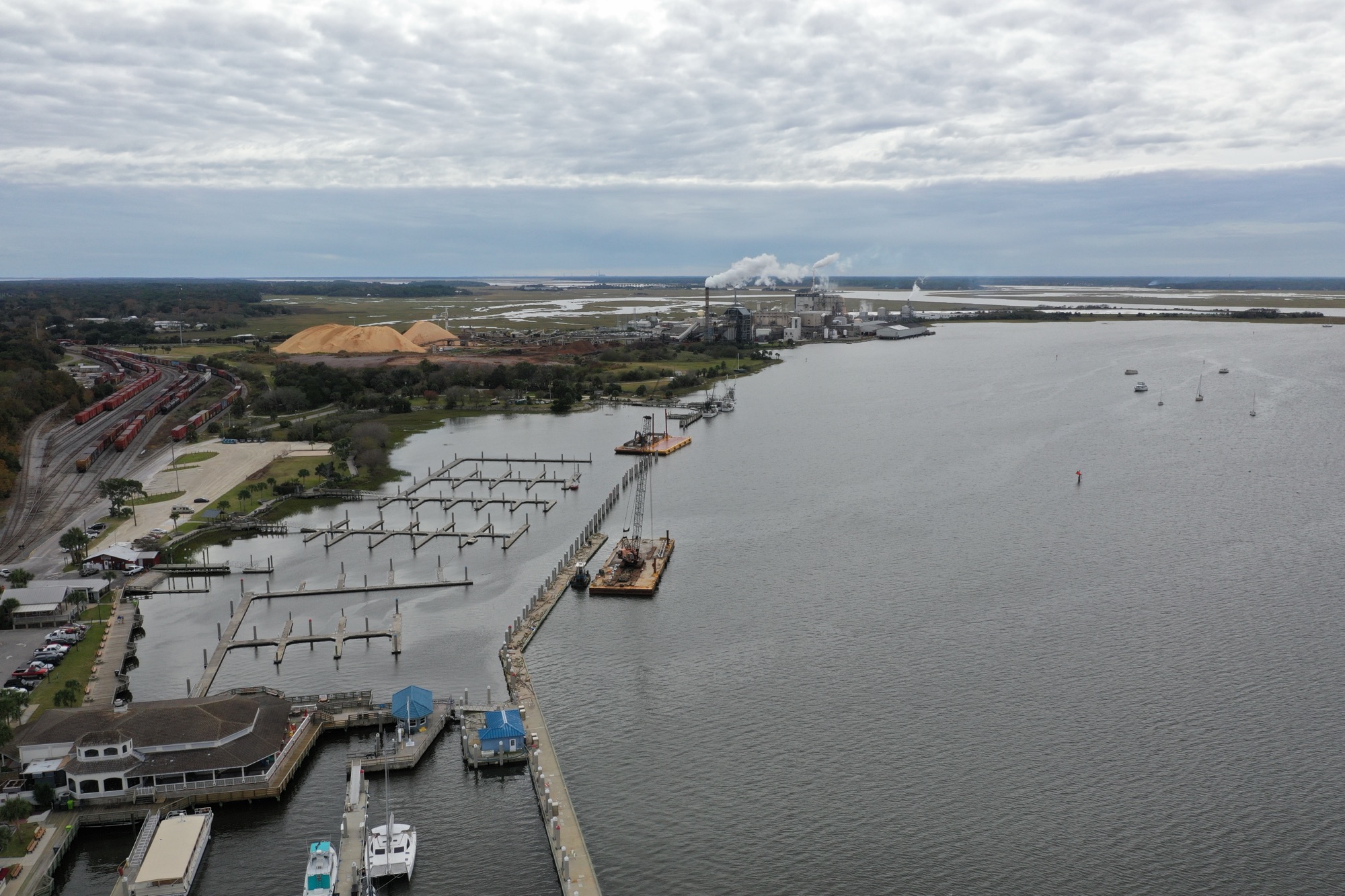
A typical pulp and paper mill or similar heavy industrial facility can withdraw tens of millions of gallons per day. Much of that water is used in processing and then treated and discharged back into surface waters. High withdrawal does not necessarily mean high permanent loss.
By contrast, a large hyperscale data center uses water primarily for cooling:
- Rough range: 0.5 to 5 million gallons per day (MGD) depending on size and design
- In traditional evaporative systems, a significant portion is consumptive (lost to evaporation)
So the tradeoff looks like this:
- Heavy industry: very high withdrawals, with significant return flows
- Data centers: lower total withdrawals, with a higher percentage of that water consumed
That distinction matters. It means you cannot directly compare “millions of gallons per day” without understanding how much is actually lost versus returned.
Side-by-Side Comparison: Typical Daily Water Withdrawals by Industry
To put this in perspective, here are order-of-magnitude daily water withdrawal ranges for major water-using sectors. Actual usage varies widely based on facility size, technology, and permits.
- Pulp & Paper Mill: ~10–50+ MGD
- Thermoelectric Power Plant (once-through cooling): ~20–1000+ MGD (very high withdrawals, most returned)
- Thermoelectric Plant (recirculating cooling towers): ~2–20 MGD
- Agricultural Irrigation (large operation): ~1–50+ MGD (highly seasonal and location-dependent)
- Food Processing Plant (large-scale): ~1–10 MGD
- Petroleum Refinery: ~1–5 MGD
- Chemical Manufacturing Facility: ~1–10 MGD
- Mining Operations (with dewatering/processing): ~1–20+ MGD
- Municipal Water Supply System (mid-sized city): ~5–50+ MGD
- Hyperscale Data Center: ~0.5–5 MGD (often lower with modern cooling systems)
Key takeaway: data centers generally fall at the lower end of large industrial water withdrawals, while some legacy and infrastructure systems operate at far larger scales.
What About Modern Data Centers?
The conversation often ignores how quickly cooling technology is evolving.
Newer designs can reduce water demand significantly:
- Closed-loop systems reuse water instead of constantly withdrawing fresh supply
- Liquid and immersion cooling reduce or eliminate evaporative loss
- Air-cooled systems can drastically cut or even eliminate water use in some environments
Industry and policy analyses suggest these approaches can reduce freshwater demand by 50–70% or more, with some facilities approaching near-zero net water use depending on configuration and climate.
The takeaway is straightforward: the “worst case” water numbers for data centers are already being reduced in newer builds.
Florida Context: Water Stress Is Real — But Not Uniform
Florida does face water stress in certain regions. For example, the Southwest Florida Water Management District issued a Modified Phase III “Extreme” Water Shortage in April 2026, restricting irrigation to one day per week across multiple counties.
Florida is not one uniform system. Different regions operate under different water management districts, and supply conditions vary widely. Any serious evaluation of a project needs to be local, permit-specific, and based on actual aquifer capacity and recharge, not assumptions carried over from other parts of the state.
Fiscal Impact: Quietly One of the Biggest Differences
Water gets the headlines, but long-term fiscal impact is just as important.
Data centers are:
- Capital-intensive
- Low employment density
- High assessed property value
That combination tends to produce strong tax output with relatively low demand on public services.
A commonly cited real-world example is Loudoun County, Virginia, where local government reports that data centers generate roughly $26 in tax revenue for every $1 in county services consumed.
That ratio is not guaranteed everywhere, though it does illustrate the model:
- Minimal traffic impact
- Few school-age dependents
- Limited strain on day-to-day public services
More labor-intensive industries support more jobs, which is a positive, but they also tend to increase demand for housing, roads, schools, and public services.
Both models can be net positives. They simply operate very differently.
What This Means for Decision-Making
The current debate tends to frame data centers as uniquely resource-intensive. That framing is incomplete.
A more accurate view looks like this:
- Many traditional industries already operate at large water-withdrawal scales
- Data centers typically operate at lower total withdrawal levels, though with different consumption characteristics
- Modern cooling technology is actively reducing water demand
- Fiscal return per unit of public service is often very high for data centers
That does not mean every project is a good idea. It means decisions should be based on:
- Actual permit applications
- Verified water modeling
- Infrastructure capacity studies
- Clear disclosure of cooling methods and energy use
Final Thought
This is not an argument against existing industry or in favor of unchecked development. It is an argument for accurate comparisons.
If a project moves forward, it should be evaluated on real numbers — not worst-case assumptions, and not incomplete comparisons to legacy industries that already operate at scale.
AI Disclaimer:
This post was written with the assistance of AI. All facts, figures, and comparisons are based on publicly available information, including water management district guidance, industry analyses, and government-reported data as of April 2026. The industry water-use ranges presented are generalized estimates and may vary significantly by facility, technology, and permit conditions. Interpretations and framing are those of the author. Readers should verify details with primary sources and local officials, as project specifics can evolve. This is not financial, legal, or policy advice.
