


Downtowns don’t change by accident. They change because policy pushes them.
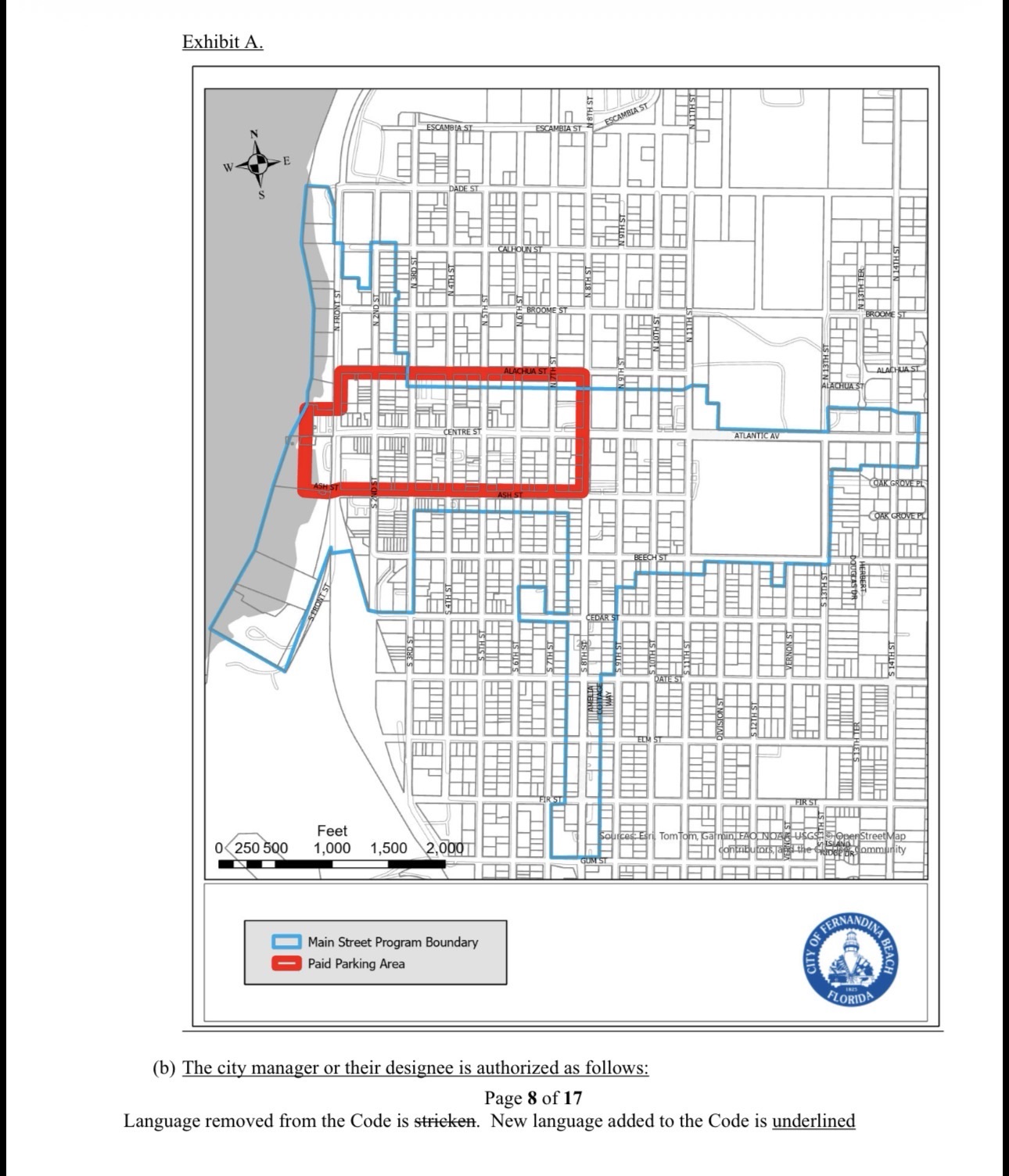
Fernandina’s paid parking program is being framed as a management tool — about turnover, fairness, and access. But there is a structural flaw embedded in it that deserves attention. Paid parking doesn’t simply regulate curb space. It shifts incentives, and over time it reshapes the business mix.

Parking policy is land-use policy in disguise.
When you price curb space and emphasize turnover, you favor businesses that rely on high customer volume and shorter dwell times. In practice, that means restaurants and bars — especially those supported by alcohol margins. Those businesses can absorb parking friction. They benefit from table cycles. They are built around peak intensity.
Retail operates differently.
Boutiques, galleries, specialty shops, service providers, and professional offices rely on slower visits and daytime foot traffic. They benefit from ease and predictability, not pressure. Paid parking discourages casual browsing and compresses visit time. Over time, that affects viability.
The math illustrates the pressure.
A 150-seat restaurant typically generates demand for roughly 40 to 50 parking spaces at peak. Five restaurants at that scale can require 200 to 250 spaces — often within the same two- to three-hour window. If downtown supports 15 restaurants of that size, peak demand could approach 600 to 750 spaces. That figure excludes employees, rideshare staging, and residual traffic from bars or events.
Those peaks overlap.
And that overlap is the issue.
A healthy downtown does not stack peak demand from identical uses. It staggers it.
Offices need parking primarily from 8 a.m. to 5 p.m., Monday through Friday.
Service businesses and appointments concentrate mid-day.
Retail peaks in late morning and afternoon.
Restaurants peak evenings and weekends.
Residential demand stabilizes overnight.
When these uses coexist, parking is shared across time. A space used by an attorney at 10 a.m. can serve a shopper at 2 p.m. and a diner at 7 p.m. The same space generates three economic functions without expansion.
That is efficiency.
But when a district skews heavily toward dining, demand stacks between roughly 5:30 p.m. and 9:30 p.m., especially on weekends and event nights. Fifteen restaurants peaking simultaneously do not share parking — they compete for it. The system becomes compressed into narrow windows.
Paid parking that encourages turnover amplifies that stacking. It increases throughput, which increases restaurant viability, which attracts more restaurants, which increases synchronized demand.
Landlords respond to the strongest margins. Restaurant rents are often supported by alcohol revenue. Retail cannot compete at those rent levels. Over time, the district becomes more one-dimensional.
That concentration creates fragility.
A restaurant-dominant downtown is exposed to tourism swings, economic downturns, insurance costs, labor shortages, and seasonal volatility. Dining is discretionary spending. When conditions tighten, it tightens first.
A diversified downtown is structurally more resilient because its revenue streams are staggered across sectors and across time.
The flaw in paid parking is not that it charges for spaces. It is that it quietly encourages stacking of peak demand among similar high-intensity businesses.
Parking supply functions as infrastructure capacity. When capacity is limited and diverse uses share it across time, growth moderates naturally and stability improves. When turnover is engineered to increase effective capacity during peak dining hours, policy tilts toward the very uses that compress demand.
Fernandina is a small coastal city with physical limits. Once downtown shifts heavily toward a dining corridor model, reversing that shift is difficult. Retail rarely returns at restaurant-driven rents. Offices do not relocate into nightlife-heavy zones. Character follows economics.
This is not an argument against restaurants. It is an argument against stacking similar peak uses at scale.
The long-term question is simple: do we want a balanced downtown that shares infrastructure across time, or a compressed entertainment district that concentrates demand into narrow windows?
Parking policy will help decide that.
