


AI … New Art or Not Art?
The creation of art has always been more than the final brushstroke, chisel mark, or shutter click—it’s the expression of human intent distilled through deliberate choices. In the age of generative AI, that core truth hasn’t vanished; it has simply shifted form. The real artistry today often lies in the human behind the prompt: the vision that shapes extensive, nuanced inputs, the relentless iteration, the ruthless selection from dozens (or hundreds) of outputs, and the final curation that declares, “This one speaks my truth.”

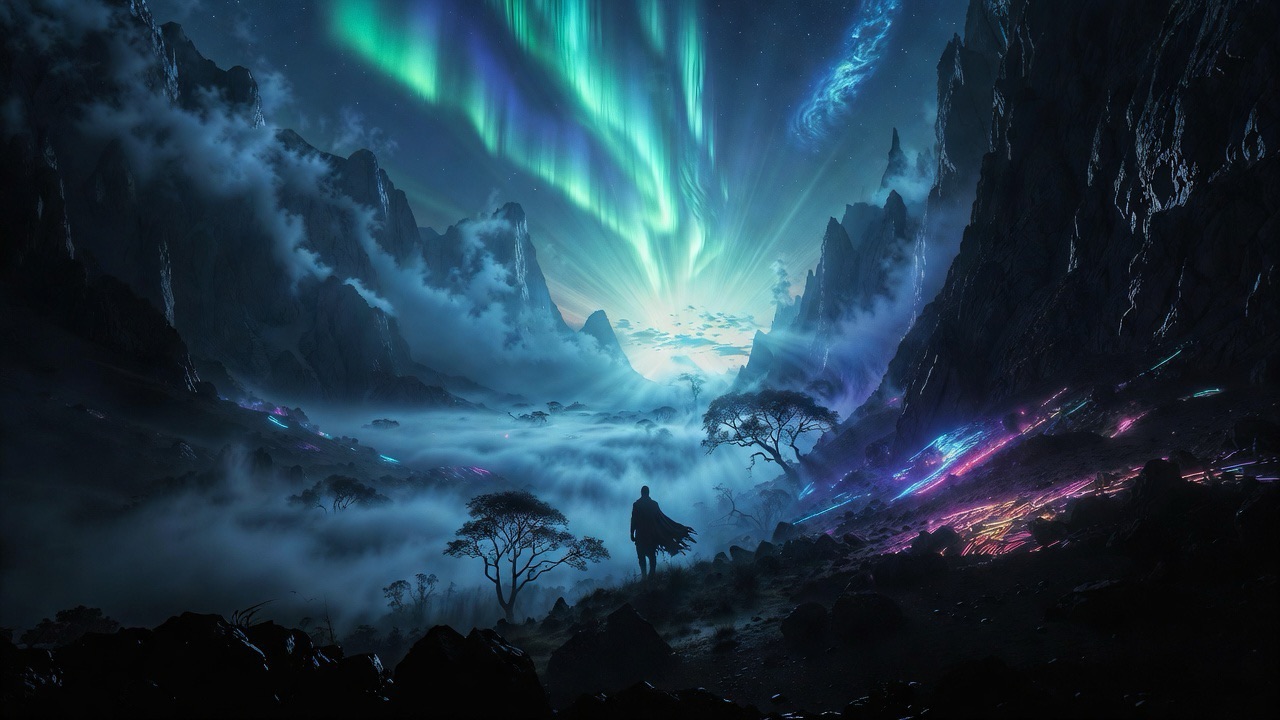
Consider what happens when someone sits down with Midjourney, DALL-E, or Stable Diffusion. A novice might type “beautiful landscape” and accept the first generic result. But the skilled practitioner crafts a layered directive: “A twilight alpine valley in the style of Caspar David Friedrich meets cyberpunk neon, volumetric god rays piercing mist-shrouded peaks, lone wanderer in tattered cloak silhouetted against aurora borealis, intricate chiaroscuro, cinematic composition, 8K hyper-detailed, emotional resonance of solitude and wonder –ar 16:9 –stylize 750 –v 6.” Then they generate variations, tweak weights, remix elements, reject 90% as “close but not quite,” and refine until the output aligns with an inner vision that no off-the-shelf model could guess.
That process demands creativity at every step. Writing the prompt itself is an act of precise language—evoking mood, reference, lighting, emotion, and abstraction in a way that persuades a probabilistic system to manifest something coherent and moving. It’s akin to directing a film without touching the camera: you set the scene, cast the archetypes, dictate the atmosphere, and let the “actors” (the model’s latent space) improvise within your boundaries. The artistry emerges from constraint and guidance, not raw execution.
Iteration amplifies this. Generating batches, upscaling favorites, inpainting flaws, blending elements across outputs—these are editorial decisions rooted in taste, intuition, and aesthetic judgment. The human doesn’t merely press “generate”; they curate a dialogue with the machine, rejecting noise to elevate signal. In photography’s early days, critics dismissed it as mere mechanical reproduction—yet we now revere Ansel Adams not for inventing the camera but for his masterful darkroom choices, timing, and vision. Similarly, today’s AI artist is the curator-in-chief: their intent infuses the work with meaning that pure randomness or automation lacks.
Curation is the clincher. When an artist selects one image from a sea of variants, crops it, adjusts color grading, or composites elements, they impose narrative and emotional weight. That act of discernment—deciding what resonates, what evokes feeling, what advances a personal or conceptual statement—is profoundly artistic. Without the human filter, AI outputs remain potential; with it, they become purposeful expression. Studies and artists alike increasingly describe prompt crafting as a “novel creative skill,” a blend of writing, directing, and editing that requires practice, taste, and vision to master.
The angst over AI “replacing” artists often misses this: the tool doesn’t erase human intent; it amplifies it for those willing to wield it thoughtfully. A lazy prompt yields soulless slop. An obsessive, iterated, curated one carries the imprint of a singular mind—the same spark that has defined art for millennia. Far from diminishing creativity, generative AI has birthed a new medium where the deepest artistry happens before the pixels ever appear: in the human mind that dreams, refines, and ultimately claims the work as its own. Prompt engineering, extensive prompting, and rigorous curation aren’t shortcuts—they’re the contemporary equivalent of sketching, composing, and rehearsing. In that light, they aren’t lesser forms of creation; they are creation itself, reborn for our era.