

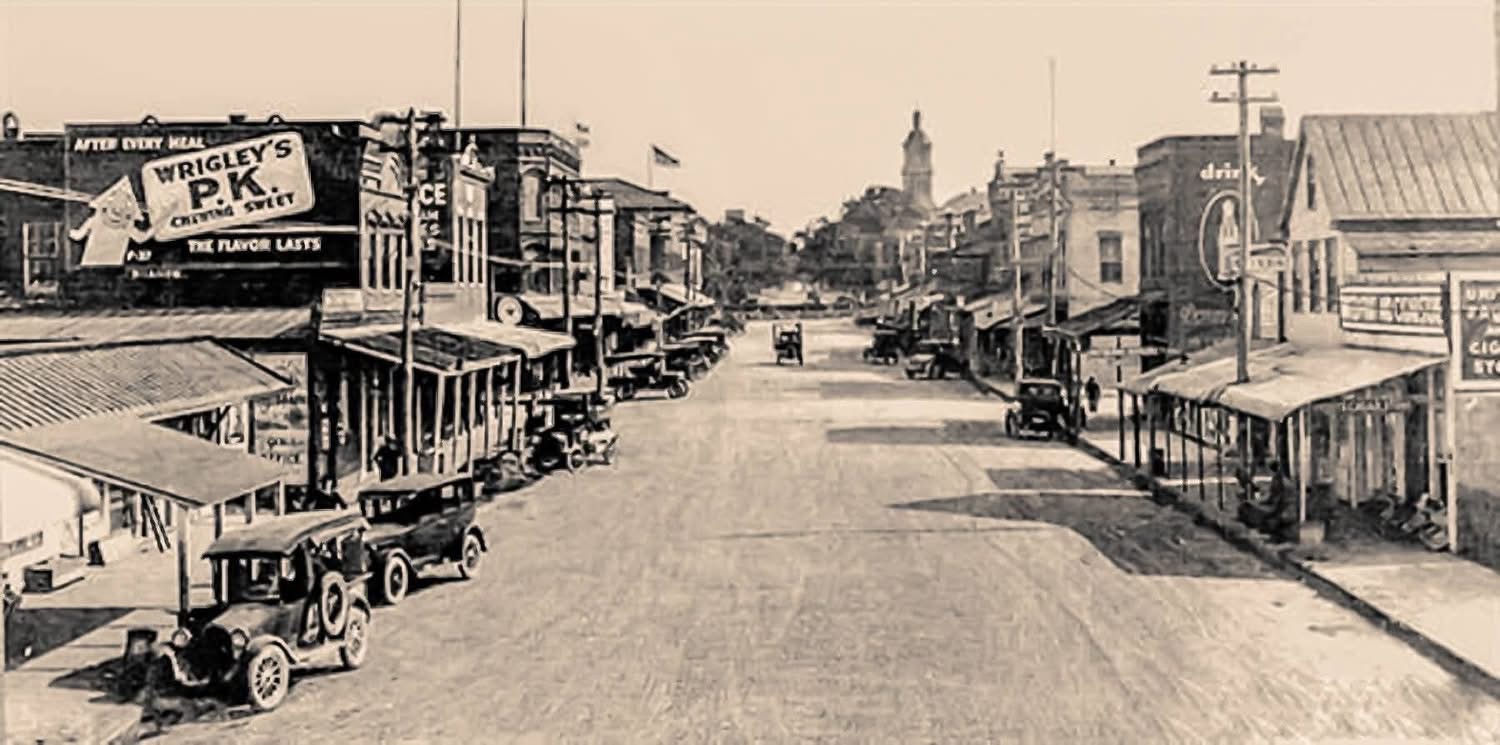
Centre Street, Fernandina Beach (c. 1915): A Town in Transition
This postcard captures Centre Street looking EAST from the Amelia River, around 1915, at a pivotal moment in Fernandina’s history. What appears at first glance to be a simple downtown street scene is, in reality, a snapshot of a town shedding its 19th-century identity and stepping—sometimes reluctantly—into the modern era.

Image: Main Street scene, historic postcard, circa 1915. Public domain.
Centre Street was the commercial spine of Fernandina Beach. Its unusual width was intentional, designed to handle wagons, rail freight, pedestrians, horses, and increasingly, automobiles. The dirt roadway seen here would soon be paved with brick as modernization accelerated.
Early automobiles and a changing streetscape
The touring cars visible are typical of the early 1910s, reflecting Fernandina’s early adoption of automobiles compared to many small Southern towns. That adoption was driven by commerce: railroads, port activity, lumber interests, and shipping demanded faster and more flexible transportation.
The canvas awnings lining the street were functional, not decorative. In a pre-air-conditioning Florida, they provided shade, cooled storefronts, and protected goods from sudden rainstorms. Nearly every business relied on them.
National advertising had arrived as well. Rooftop signage, including Wrigley’s chewing gum, shows that Fernandina was already integrated into nationwide commercial networks by this time.
Civic anchors and what’s missing
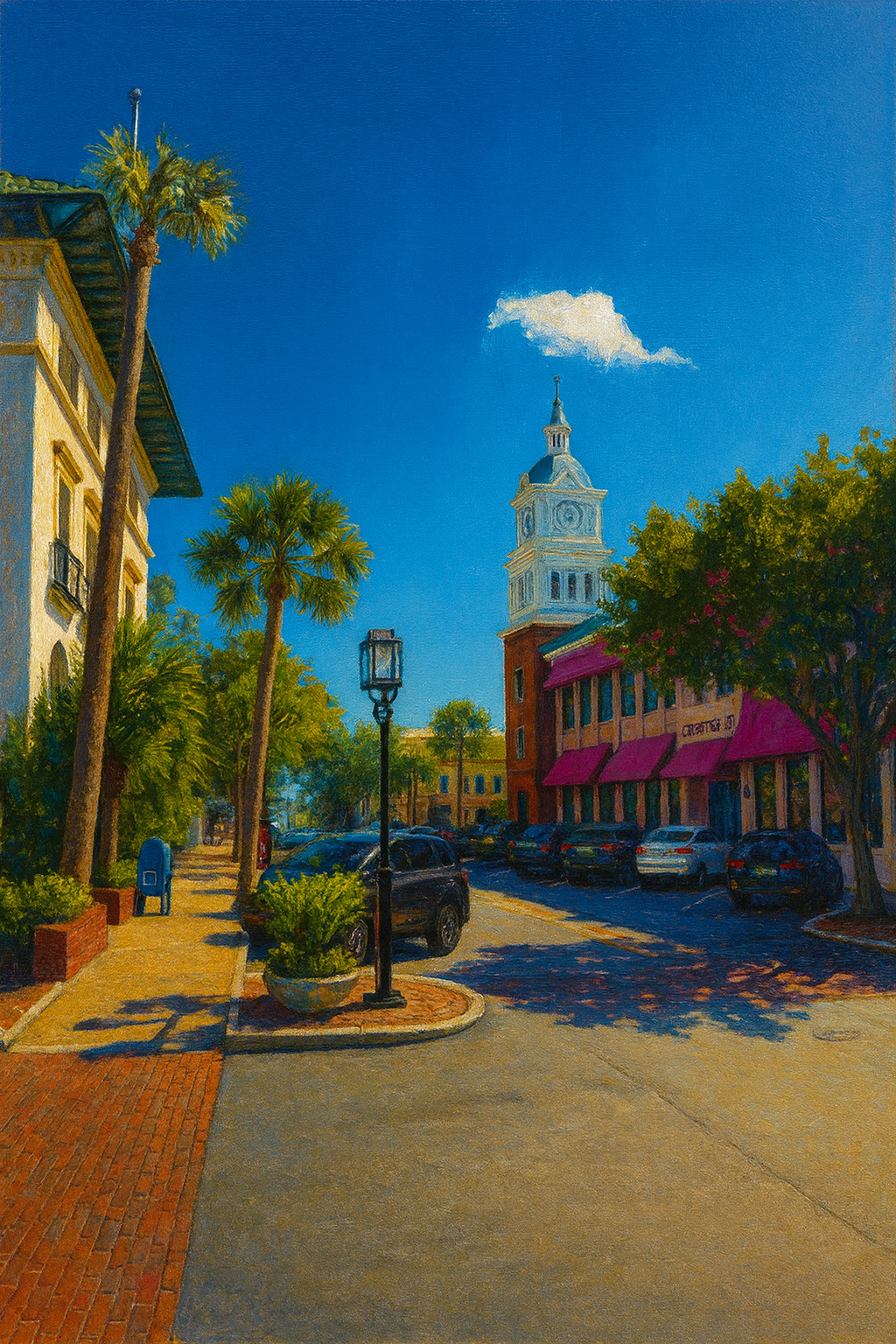
In the distance, the dome of the Nassau County Courthouse is clearly visible. Its placement in postcards was deliberate. The courthouse symbolized permanence, law, and civic order, reinforcing Centre Street’s role as both the commercial and governmental axis of the town.
Notably absent from this view is the Post Office and Customs House. Completed around 1911–1912, it sits outside this eastward view. Its construction marked continued federal investment in Fernandina as a port city, even as older industries were beginning to fade.
Industries in transition
By 1915, Fernandina’s once-dominant phosphate industry had largely ended. The phosphate boom peaked in the 1880s and 1890s, when massive quantities were processed and shipped from the waterfront. By the early 1900s, depleted supplies, shifting markets, and competition from other ports rendered large-scale phosphate processing obsolete.
Shrimping, however, was just beginning to rise. During the 1910s, new ice plants, cold storage facilities, and rail connections made large-scale shrimp export viable. By the 1920s, shrimping would become the backbone of Fernandina’s economy, defining the waterfront for decades and reshaping the town’s identity.
This postcard sits squarely between those two eras—after phosphate, before shrimping fully took over.
Why the wooden buildings disappeared
Most of the wooden storefronts seen in this image are gone today. Their disappearance wasn’t aesthetic or sentimental; it was driven by hard realities.
Fire was the primary cause.
From the 1880s through the early 1900s, Fernandina experienced repeated major fires. Closely packed wood buildings, oil lamps, coal stoves, and open flames made downtown extremely vulnerable. Entire blocks were lost at a time. After each fire, rebuilding shifted increasingly toward brick and masonry.
Insurance companies played a decisive role. By the early 1900s, many insurers either refused to cover new wooden commercial buildings downtown or charged prohibitively high premiums. Brick was simply cheaper to insure and safer to finance.
Hurricanes accelerated the process.
While storms rarely erased downtown entirely, they weakened already-aging wooden structures and made rebuilding in wood impractical. Documented storms that caused significant damage include:
1871 Hurricane – Major destruction to buildings, docks, and port infrastructure 1894 Sea Islands Hurricane – Severe regional impacts with wind and surge damage in Fernandina 1898 Hurricane – Flooding and structural damage in Northeast Florida 1906 Hurricane – Damage to waterfront and downtown structures 1910 Cuba–Florida Hurricane – Winds and rain that further deteriorated older buildings
These storms often finished off structures that fires had already compromised.
Modernization sealed their fate.
By the early 1900s, Fernandina was modernizing rapidly: brick streets, electricity, telephones, improved fire protection, and federal buildings all demanded a more permanent commercial core. Wooden buildings no longer fit the image—or the function—of a modern port town.
What still stands today
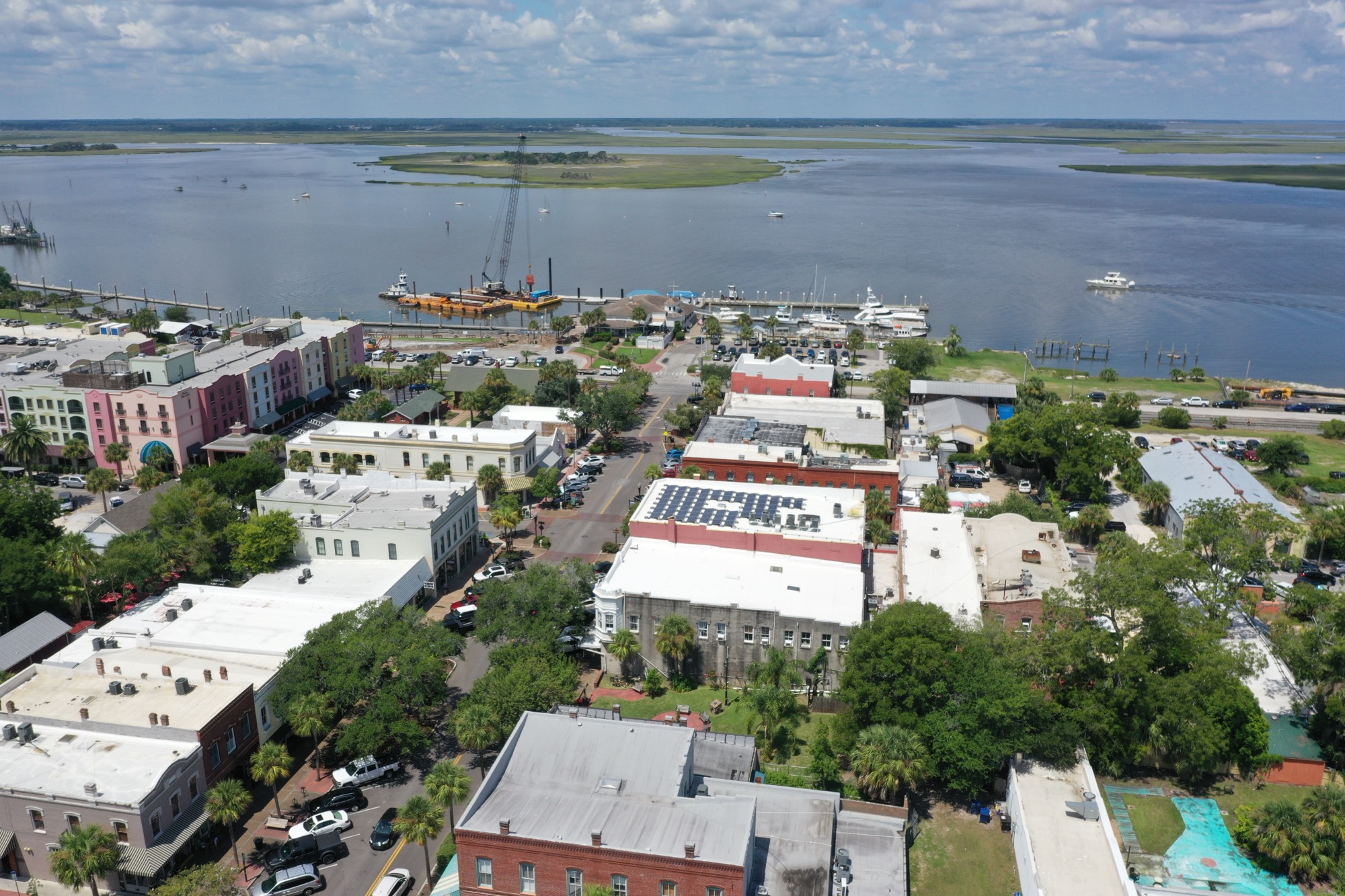
While most wood buildings are gone, many brick commercial buildings from the late 1800s and early 1900s on Centre Street still stand, often with original second stories intact. Ground floors may have changed uses, but the structures themselves reflect the rebuilding era that followed repeated disasters.
Nearby, the Palace Saloon (1890) remains one of the clearest survivors from Fernandina’s boom years, standing just blocks from this view.
The moment captured
This postcard captures Fernandina at its last moment of wooden, industrial confidence—after phosphate had faded, before shrimping dominated, and just as automobiles, brick construction, and modernization reshaped the town permanently.
The Centre Street we know today exists not because of early preservation efforts, but because fire, storms, insurance realities, and economic necessity forced better construction.
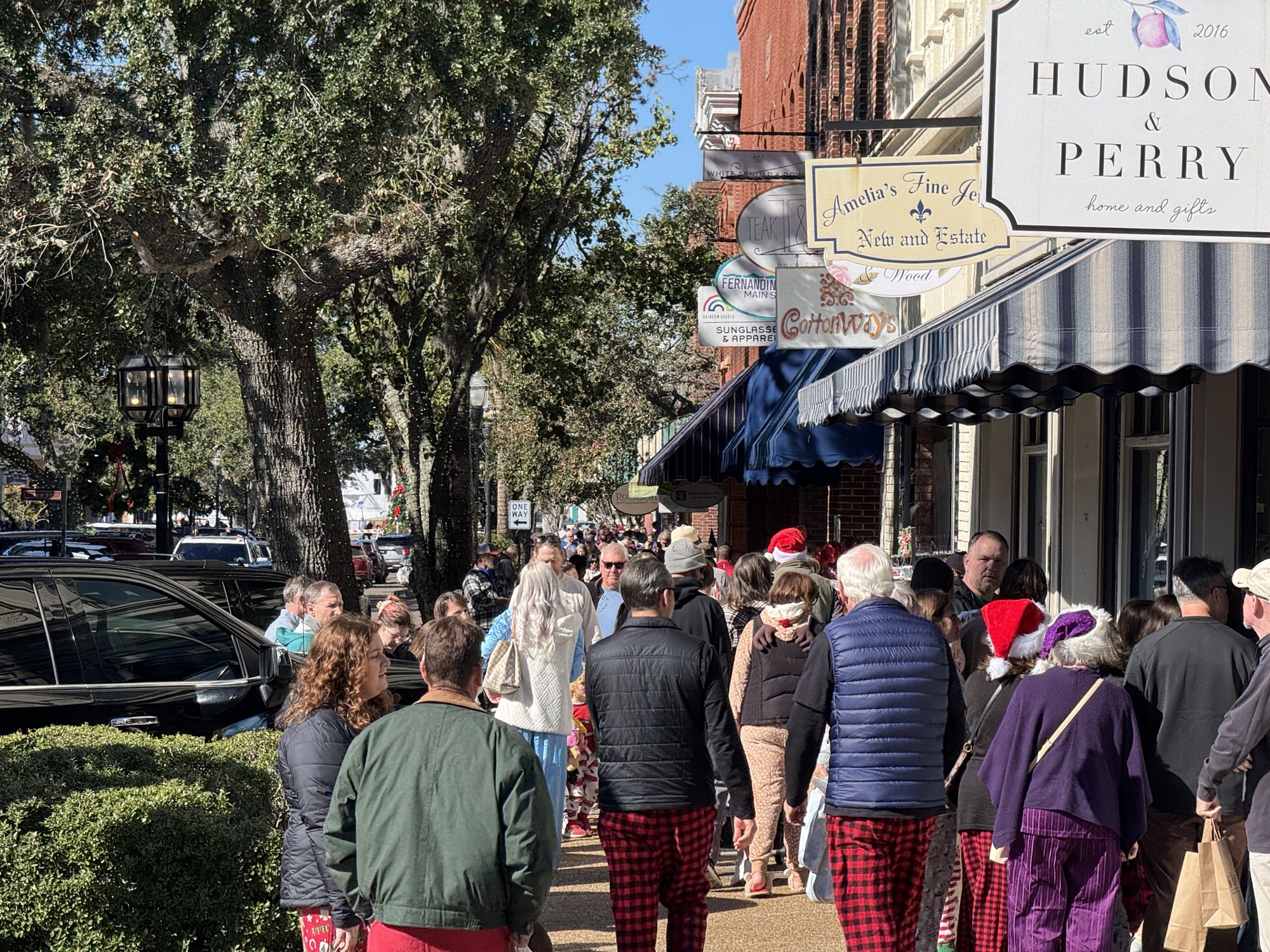
When you walk Centre Street now, you are walking through this exact moment in time—paved, electrified, and repurposed, but still unmistakably shaped by what came before.
—
AI-assisted historical interpretation based on local archives, storm records, architectural timelines, and documented economic transitions.