

Soccer Field and Airport Futures Tied, but Do we have the vision?
Below is a comparison of the three alternatives for addressing the future of the Ybor-Alvarez soccer fields in Fernandina Beach, Florida, as outlined in the Fernandina Observer article, now incorporating the new information about the strategic sense of buying airport land due to high-matching FAA/DOT grants (95% federal match, where $1 from the city/airport leverages $19 in federal funds, plus potential Florida DOT support reducing local costs further) and the constraints that the city lacks alternative property, purchasing new land within city limits is cost-prohibitive, and the Simmons Road acreage is likely too small and would face significant resistance. The golf course was noted as a potential site but not explicitly discussed in the article. The comparison evaluates each option based on cost, location/accessibility, benefits/drawbacks, stakeholder opinions, timelines/considerations, and the impact of the new information, with a focus on brevity where possible while addressing the new financial incentives for airport land purchase.
Comparison of Alternatives
1. Proceed with the Existing Plan: Purchase 10–12 Acres of Adjacent Airport Land
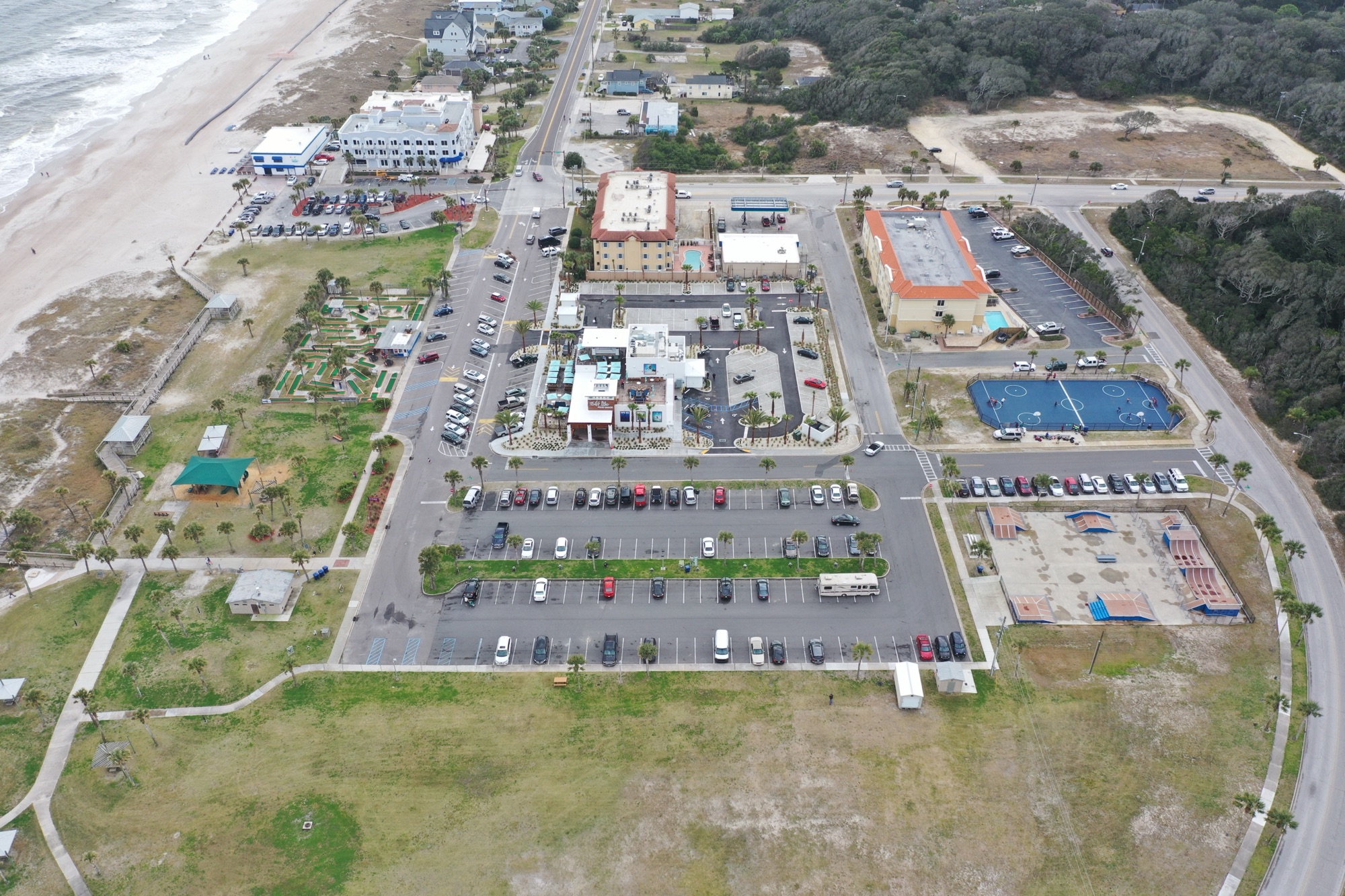
• Description: Purchase 10–12 acres of city-owned airport land (valued at $1.8 million) next to the current Ybor-Alvarez site, including softball fields, to build new soccer facilities, allowing the airport to use proceeds for improvements like hangars.
• Estimated Cost: $1.8 million for land acquisition plus $1.3–1.7 million (or more) for construction, potentially increased by stormwater/environmental issues—highest-cost option. However, the $1.8 million reinvested into the airport can leverage FAA grants (95% match, $1 local yields $19 federal) for projects like hangars, plus Florida DOT grants (up to 80% state share or ~2–8% supplemental), significantly reducing net city costs for airport upgrades and indirectly benefiting the city’s economy.
• Location/Accessibility: On-island, near the current site, maintaining accessibility for Fernandina Beach residents.
• Benefits:
• Preserves a central location, addressing poor field conditions (e.g., drainage).
• Airport reinvestment of $1.8 million can fund improvements (e.g., $36 million in projects with 95% FAA match), boosting aviation revenue, jobs, and tourism, indirectly benefiting the city.
• Avoids the need for scarce new land in a city with limited alternatives.
• Drawbacks:
• High upfront cost ($3.1–3.5 million total) strains city budget.
• “Buying back” city-owned land criticized as redundant by Commissioner Joyce Tuten.
• Environmental/construction challenges may inflate costs or delay progress.
• Impact of New Constraints and Grant Info:
• Land Scarcity: With no alternative city-owned land, Simmons Road too small/contentious, and new purchases cost-prohibitive, this option’s ready site is a major advantage.
• Grants: The 95% FAA match (plus Florida DOT support) makes the $1.8 million land purchase more appealing, as airport improvements could yield $19 in federal/state funds per local dollar, offsetting criticism of cost and enhancing economic returns (e.g., more aviation activity). This shifts the option from financially burdensome to strategically viable.
• Golf Course: Not mentioned in the article but could face resistance similar to Simmons Road, making airport land a less contentious choice.
• Stakeholder Opinions:
• Critical due to cost (Tuten called it nonsensical; Commissioner Tim Poynter deemed it premature without a parks master plan).
• Grant benefits may sway opinions, as economic gains from airport upgrades align with Poynter’s call for exploring city-owned land and Commissioner Genece Minshew’s demographic focus, given aviation’s regional impact.
• Timelines/Other Considerations:
• Urgent due to FAA pressure to repurpose the current site for hangars.
• $1.7 million Nassau County pledge (expiring September 2027) could offset soccer field costs, but FAA/DOT grant timelines for airport projects (often multi-year) require swift action to align funding.
2. Partner with Nassau County: Expand Facilities Off-Island in Yulee
• Description: Collaborate with Nassau County to redirect/return the $1.7 million pledge to expand a planned Yulee soccer complex (three fields by late 2026, room for three more if funded).
• Estimated Cost: Lowest—leverages county’s $1.7 million and infrastructure, requiring minimal city investment. No direct FAA/DOT grant benefits, as the project is unrelated to aviation.
• Location/Accessibility: Off-island in Yulee, less convenient for Fernandina Beach residents but serving regional demand in a growing area.
• Benefits:
• Cost-effective, avoiding land acquisition and utilizing county plans for faster implementation (late 2026).
• Increases field capacity for regional growth.
• Sidesteps city’s land scarcity and high purchase costs.
• Drawbacks:
• Off-island location may inconvenience local users.
• Requires intergovernmental coordination, risking delays.
• Lacks the economic multiplier effect of airport-related grants.
• Impact of New Constraints and Grant Info:
• Land Scarcity: With no viable city-owned land (Simmons Road too small/contentious, golf course likely resistant), this option’s avoidance of land acquisition is a major strength.
• Grants: No FAA/DOT grant benefits, reducing its financial leverage compared to Alternative 1. The $1.7 million county pledge is the primary funding, but it doesn’t match the airport’s potential $19-to-$1 federal/state return.
• Golf Course: Resistance to repurposing recreational land (like Simmons Road or golf course) makes Yulee’s off-island site more practical.
• Stakeholder Opinions:
• Favored for cost savings (Capital Project Manager Glen Akramoff called it “lower cost”).
• Vice Mayor Darron Ayscue stressed prior county discussions, which remain critical.
• Less appealing if stakeholders prioritize on-island access or airport-driven economic gains.
• Timelines/Other Considerations:
• Aligned with county’s late-2026 timeline and $1.7 million pledge deadline (September 2027).
• Swift coordination needed, but no aviation grant complexities.
3. Identify a Completely New Site: Develop a Fresh Complex Elsewhere
• Description: Develop a new soccer complex, potentially using part of the city golf course (suggested but not in article) or other unidentified land, as Simmons Road is too small and contentious.
• Estimated Cost: Moderate to high—$1.3–1.7 million for construction, plus land costs if not using city-owned property like the golf course. Golf course use could lower land costs but incur redesign/community pushback expenses. No FAA/DOT grant benefits, as the project is non-aviation.
• Location/Accessibility: Undetermined; golf course would be on-island, maintaining accessibility, but other sites could be cost-prohibitive or off-island.
• Benefits:
• Avoids airport’s $1.8 million cost and FAA constraints.
• Golf course keeps facilities local; new site could align with demographic growth (per Minshew).
• Drawbacks:
• City’s lack of alternative land and high purchase costs make new sites nearly infeasible.
• Golf course repurposing likely faces resistance similar to Simmons Road, delaying progress.
• No aviation grant leverage, unlike Alternative 1.
• Impact of New Constraints and Grant Info:
• Land Scarcity: Simmons Road’s inadequacy and cost-prohibitive purchases severely limit options. The golf course is the main city-owned alternative but risks community opposition, reducing feasibility.
• Grants: No FAA/DOT benefits, making it less financially attractive than Alternative 1’s high-match potential.
• Golf Course: Resistance concerns (like Simmons Road) and lack of article mention suggest significant hurdles, requiring public engagement.
• Stakeholder Opinions:
• Supported by Poynter for exploring city land and Minshew for demographic alignment, but golf course resistance could mirror Simmons Road issues.
• Less favorable without grant leverage or clear site availability.
• Timelines/Other Considerations:
• Less urgent but requires a parks master plan and demographic study.
• Golf course opposition or site searches could delay progress beyond 2027 pledge deadline.
Direct Comparison with New Information
• Cost Efficiency:
• Alternative 2 remains the cheapest, using county funds and avoiding land costs.
• Alternative 1’s $3.1–3.5 million is high but offset by FAA/DOT grants (95% match, $1 local yields $19 federal, plus state support), making it more competitive by funding airport upgrades with economic returns.
• Alternative 3’s costs vary, but lack of grants and potential golf course resistance add financial risks.
• Location and User Impact:
• Alternatives 1 and 3 (if golf course) keep fields on-island, prioritizing local access.
• Alternative 2’s Yulee site serves regional growth but reduces convenience for Fernandina Beach residents.
• Pros/Cons Balance:
• Alternative 1: High cost but justified by FAA/DOT grants enabling major airport upgrades (e.g., $36 million from $1.8 million), plus avoids land scarcity issues. Best for economic impact.
• Alternative 2: Lowest cost and sidesteps land constraints, ideal for budget and timeline, but lacks on-island access and grant leverage.
• Alternative 3: Flexible but hampered by land scarcity, golf course resistance, and no grants, making it least practical.
• Stakeholder Consensus:
• Alternative 1’s grant benefits may counter cost criticisms (Tuten, Poynter), aligning with economic goals.
• Alternative 2 is favored for savings (Akramoff) but needs county talks (Ayscue).
• Alternative 3’s support (Poynter, Minshew) weakens with golf course/Simmons Road resistance and no grants.
• Timelines and Risks:
• All face FAA urgency and 2027 pledge deadline.
• Alternative 2 is fastest (2026 county timeline).
• Alternative 1 risks construction delays but gains from grant timelines.
• Alternative 3 risks delays from opposition or site searches.
• Impact of New Info:
• Grants: Alternative 1’s 95% FAA match (plus Florida DOT) makes it a strong contender, as $1.8 million could unlock $36 million in airport projects, boosting city revenue.
• Land Scarcity: Rules out Alternative 3 unless using the golf course, which faces resistance like Simmons Road.
• Alternative 2 remains practical for avoiding land issues.
Recommendation
With the city’s lack of alternative land, prohibitive costs for new purchases, Simmons Road’s inadequacy, and potential golf course resistance, Alternative 1 (buying airport land) is now the most strategic choice, despite its high upfront cost. The 95% FAA match (plus Florida DOT support) means the $1.8 million land purchase could enable $36 million in airport upgrades, driving economic benefits (e.g., aviation revenue, jobs) that indirectly offset costs and align with regional growth. Alternative 2 (Yulee partnership) is cost-effective and leverages the $1.7 million county pledge, but its off-island location and lack of grant leverage reduce its long-term impact. Alternative 3 is least viable due to land scarcity, golf course opposition, and no grants. The city should pursue Alternative 1, ensuring swift FAA/DOT grant applications and using the county pledge to offset soccer field construction, while confirming airport project timelines with the FAA.
This analysis integrates the article, land constraints, and FAA/DOT grant details. [0] [13] [23] [24] [26]