





🌱 Why a Living Shoreline Beats a Concrete Wall 🌱
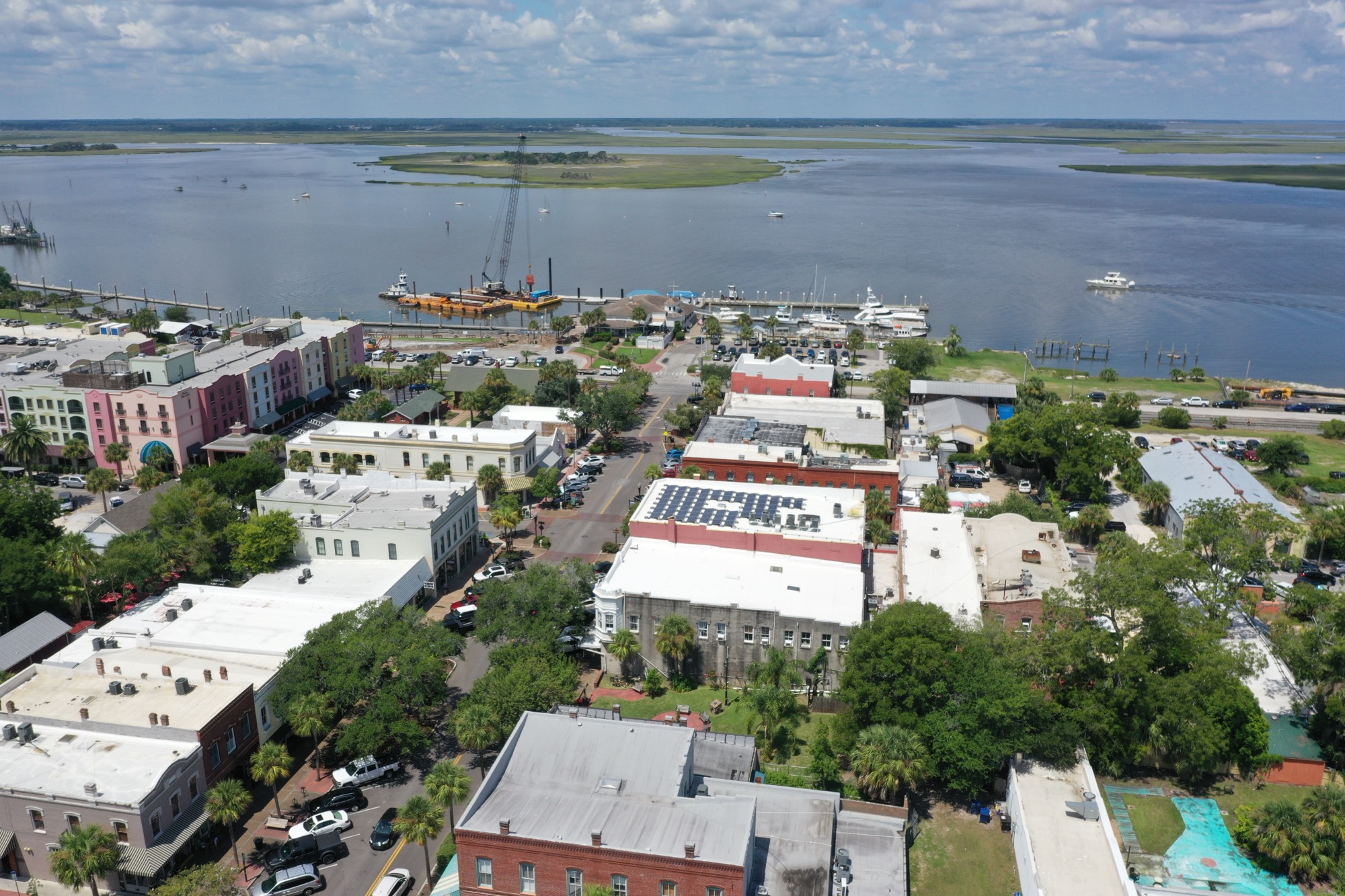
If Fernandina’s real goal is resiliency, then a natural living shoreline strategy often outperforms a costly concrete “resiliency wall.” Here’s why:

🌊 Wave Energy Dissipation
A wall reflects storm surge and waves back into the river, often causing scouring at the base and undermining its own foundation. A living shoreline (oyster reefs, marsh grasses, mangroves where viable) absorbs wave energy gradually, reducing erosion without creating destructive rebound forces.
💰 Cost Effectiveness
Concrete flood walls run into the tens of millions for even short sections, with ongoing maintenance and vulnerability to overtopping. Living shorelines can be installed for a fraction of the cost, and much of the work is eligible for state and federal grant funding (NOAA, Army Corps, Florida DEP all actively fund them).
🌿 Environmental & Community Benefits
Provides habitat for fish, crabs, shrimp, and birds — boosting the local ecosystem that Fernandina’s identity and economy rely on. Improves water quality through natural filtration. Increases tourism appeal by preserving a natural waterfront aesthetic, rather than a barren wall.
📈 Scalability & Adaptability
A wall has a fixed height. If sea levels rise or storms exceed design specs, it fails. Living shorelines grow and adapt over time, building elevation as sediment collects around plants and oyster reefs.
🏖️ Case Studies in Florida
In St. Augustine and Tampa Bay, living shoreline projects have been shown to reduce erosion and storm impacts while costing a fraction of hardened infrastructure. FEMA and the Army Corps now recommend “nature-based solutions” as first-line defenses in coastal communities because they provide the best cost-benefit ratio long-term.

👉 Bottom line: If Fernandina pours $20+ million into a short “resiliency wall,” it will be overtopped in a major storm and become a monument to wasted spending. A living shoreline, backed by grant funding and proven science, would provide resiliency, habitat, and community value at a sustainable cost.
⚠️ Disclaimer: This commentary was prepared with AI assistance, drawing on public research and case studies. It should be read as policy analysis, not engineering or legal advice.