




Relativity Space: 3D-Printed Rockets, Reusability Plans, and the Fernandina Beach Connection
Relativity Space is an American aerospace company pushing the boundaries of rocket manufacturing and launch services. Founded in 2015 by Tim Ellis and Jordan Noone, the company is headquartered in Long Beach, California. It emphasizes large-scale 3D printing (via its Stargate platform), AI, robotics, and methane-fueled propulsion to make space access more affordable and routine. In early 2025, Eric Schmidt (former Google CEO) took a controlling stake and leadership role, injecting significant capital and expertise.
As of mid-May 2026, Relativity has raised over $2 billion, employs a large team, and is transitioning from pathfinder efforts to operational medium-to-heavy lift capabilities with its Terran R rocket.
Launch History and Terran R Development
Relativity’s first vehicle, the mostly 3D-printed Terran 1, flew once on March 23, 2023, from Cape Canaveral. The first stage performed well through liftoff, Max Q, and stage separation, but the second stage encountered an engine anomaly and failed to reach orbit. The company retired Terran 1 to focus fully on the larger Terran R.
Terran R is a partially reusable, two-stage rocket powered by 13 Aeon R engines on the first stage and one Aeon V vacuum engine on the second. Key specs include:
• Height: ~284 ft (86.6 m)
• Diameter: 17.7 ft (5.4 m)
• Payload capacity: Up to 23,500 kg to LEO (downrange landing), ~5,500 kg to GTO reusable, or higher in expendable mode
• Launch site: Launch Complex 16 at Cape Canaveral Space Force Station, Florida
First launch is targeted for late 2026, with program updates showing steady progress on tanks, thrust structures, avionics, and pad infrastructure. Relativity has secured customer deals, including multi-launch agreements with SES, and aims for rapid cadence in subsequent years.
No orbital successes or booster recoveries have occurred yet — everything remains in the pre-flight testing and production phase.
Reusability and Booster Recovery Plans
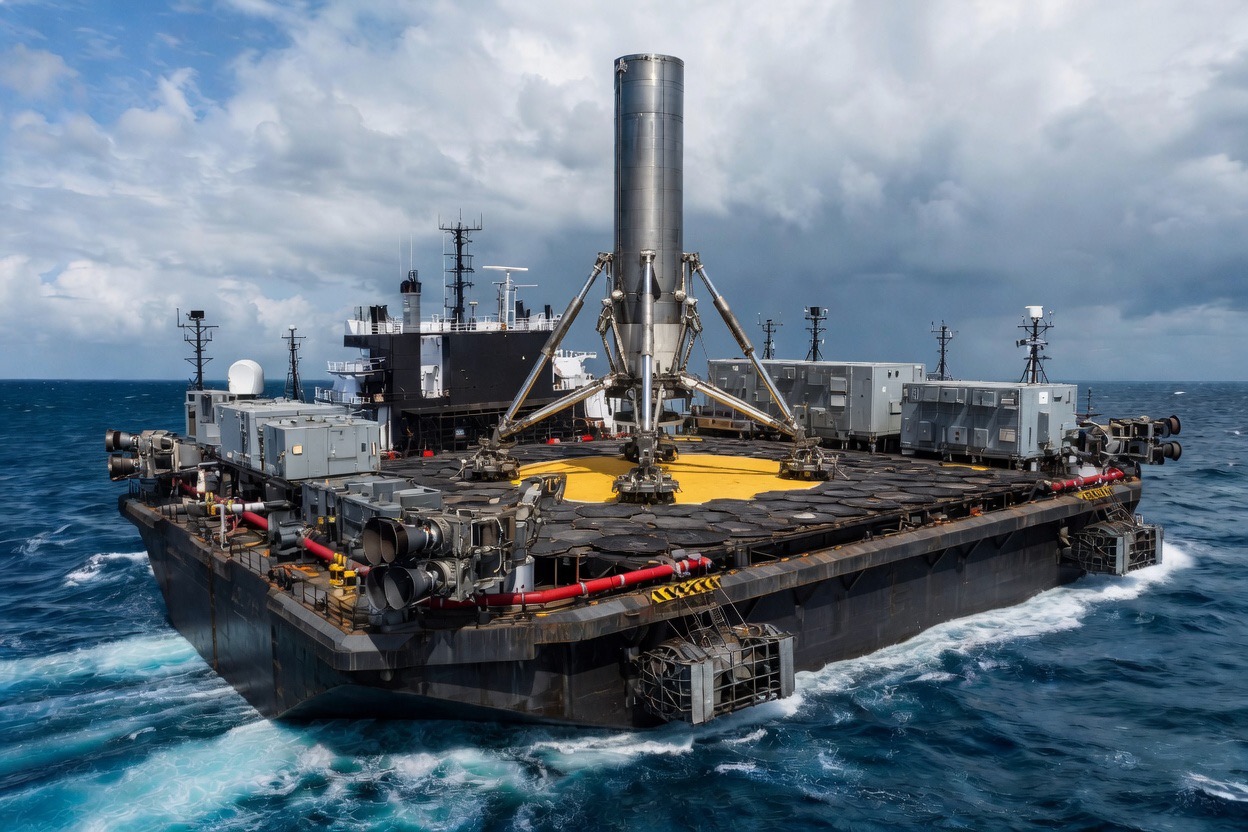
A core goal for Terran R is first-stage reusability via drone-ship (barge) landings downrange in the Atlantic. This mirrors industry practices while leveraging Relativity’s manufacturing strengths for faster refurbishment.
What happens after a successful catch?
1. The booster lands vertically on the barge’s reinforced deck using its four landing legs.
2. Automated or crew systems immediately secure it with clamps or stabilizers to handle ocean motion.
3. Technicians safe the vehicle (vent propellants, cool systems, inspect for damage).
4. A tug tows the barge (with booster upright) back to port.
5. At port, a heavy-lift crane offloads the booster onto a transporter for processing, inspection, and refurbishment at facilities near LC-16.
Recovery vessels are large, roughly football-field sized (~300 ft long by ~170 ft wide, based on similar systems), with station-keeping thrusters, heat protection, and ample deck space for the booster’s wide leg stance. Support includes tugs and chase vessels.

Fernandina Beach Role: Home for the Recovery Vessel
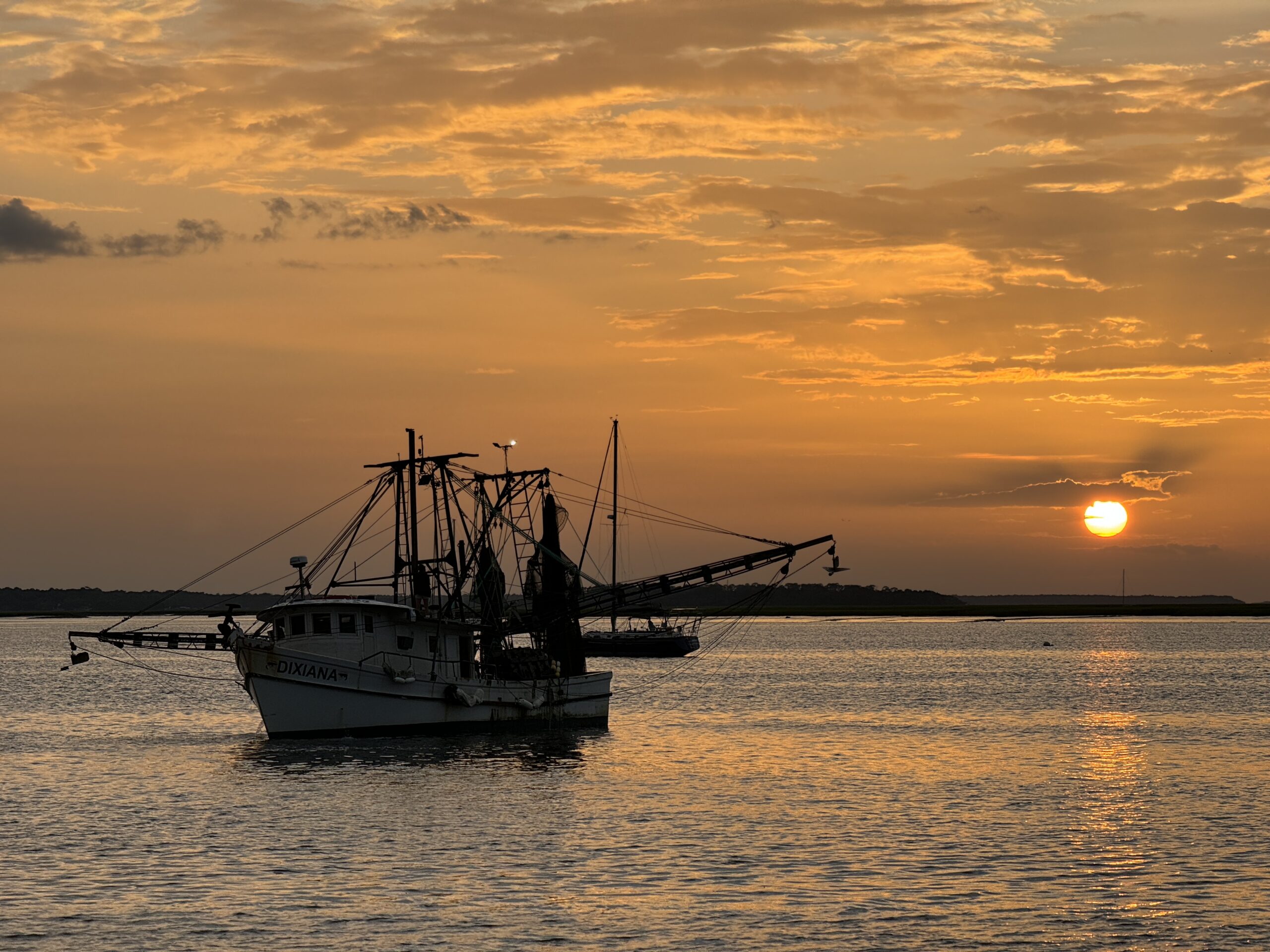
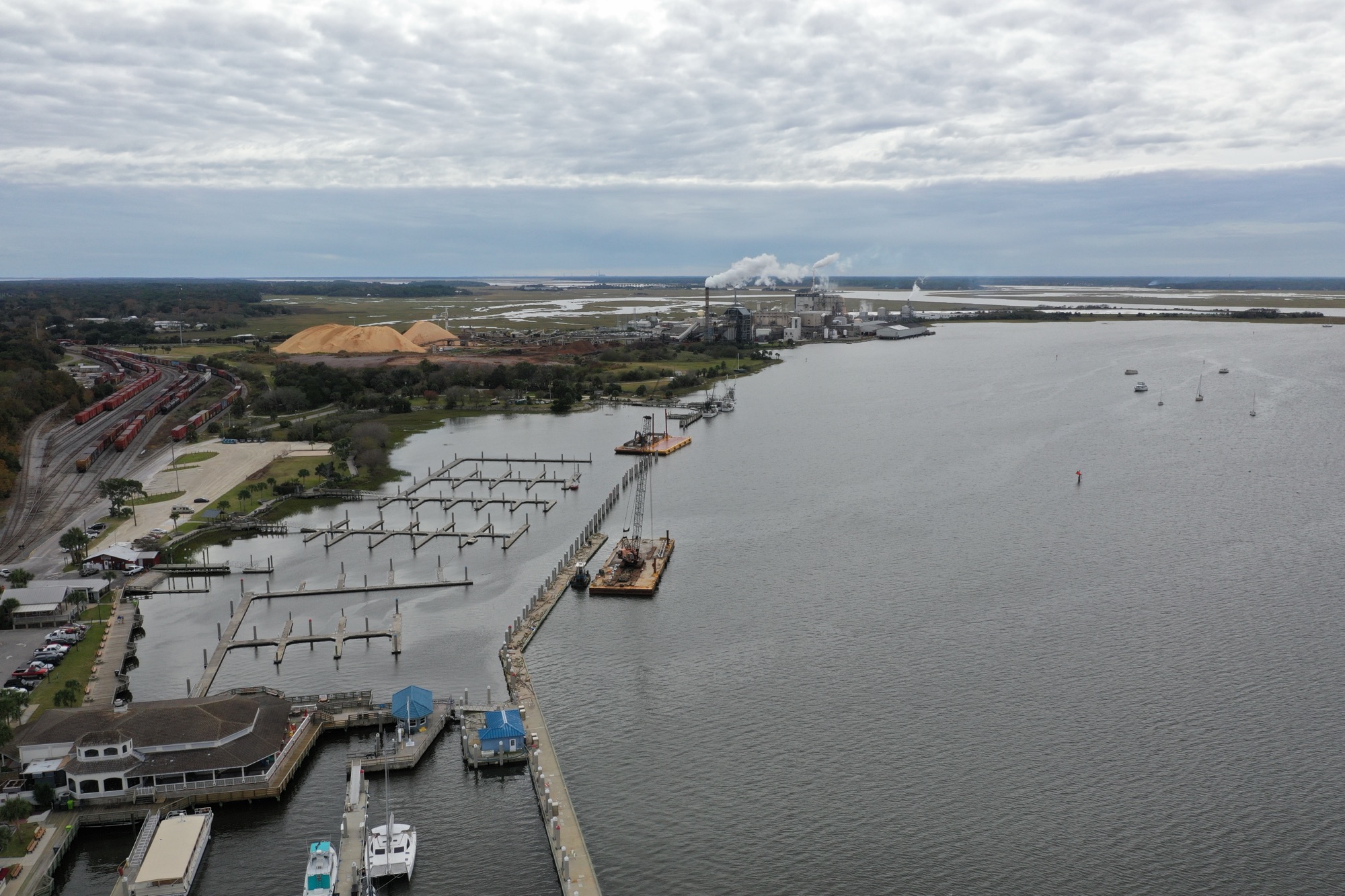
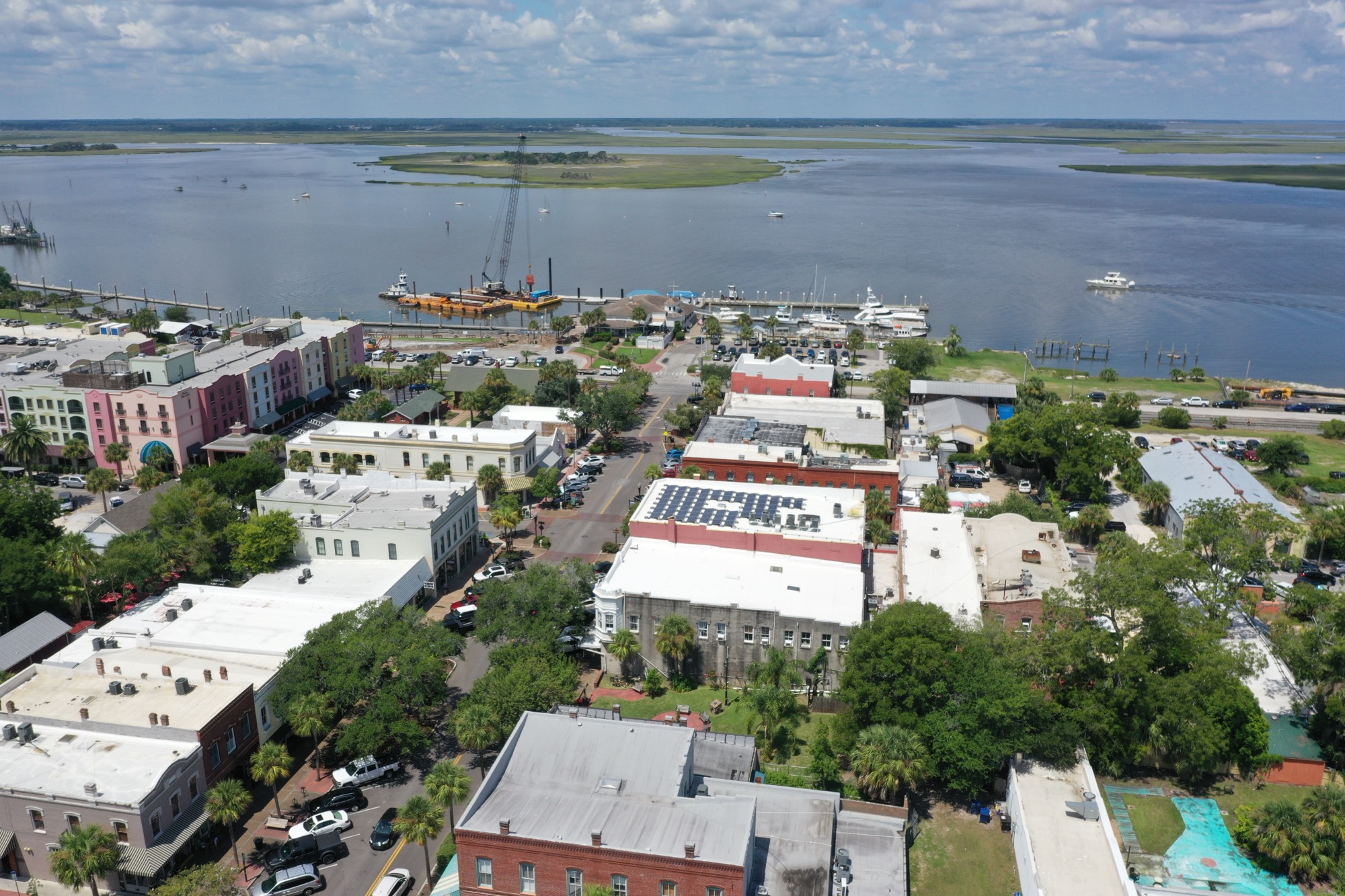
In a notable development, on May 14, 2026, the Fernandina Beach Ocean Highway and Port Authority approved (3-2 vote) an agreement to host Relativity’s specialized recovery vessel long-term at city docks. (The Port of Fernandina docks, not the City Marina)
• The barge will be berthed at Fernandina for crew operations, maintenance, and coordination between missions.
• Important clarification: Boosters will not be brought to Fernandina. After an offshore catch, the barge + secured booster will be towed south by ocean to Port Canaveral for offloading and processing. Road transport is not planned due to the booster’s size and sensitivity.
• The vessel returns (typically empty) to Fernandina afterward.
This setup positions Fernandina as a maritime support hub while leveraging Canaveral’s established rocket infrastructure. It is expected to bring technical jobs and revenue to the port, which has historically handled forest products and breakbulk cargo.
Any Conflict with Kings Bay Submarines?
No. The St. Marys Inlet/Entrance Channel serves both Fernandina’s commercial traffic and Naval Submarine Base Kings Bay (just across the Georgia border). Relativity’s plans involve a stationary or low-movement berthing arrangement for the recovery vessel in an already active commercial port.
There are no public reports of Navy concerns, opposition, or expected interference with submarine transits. Existing coordination among the Navy, Coast Guard, and port authorities handles shared channel use, and the recovery vessel follows standard maritime protocols. This appears to be a compatible, low-impact addition to port operations.
Looking Ahead
Relativity Space stands out for its innovative manufacturing approach in a competitive New Space landscape. While no IP infringement disputes with companies like SpaceX have arisen, the firm continues advancing its unique 3D-printed components and engine tech. Success with Terran R’s first flights and recoveries in late 2026 and beyond could mark a significant step toward more sustainable and frequent space access.
Operations are still pre-flight, so details may evolve. For the latest updates, follow Relativity’s program videos, website, or local coverage from Fernandina Observer. The journey from 3D-printed pathfinders to reusable orbital operations is well underway — and Northeast Florida is set to play a supporting role.
Images and summary created or included fact checking with the assistance of AI.