Today’s Court Decision and What It Means for Fernandina Beach Paid Parking
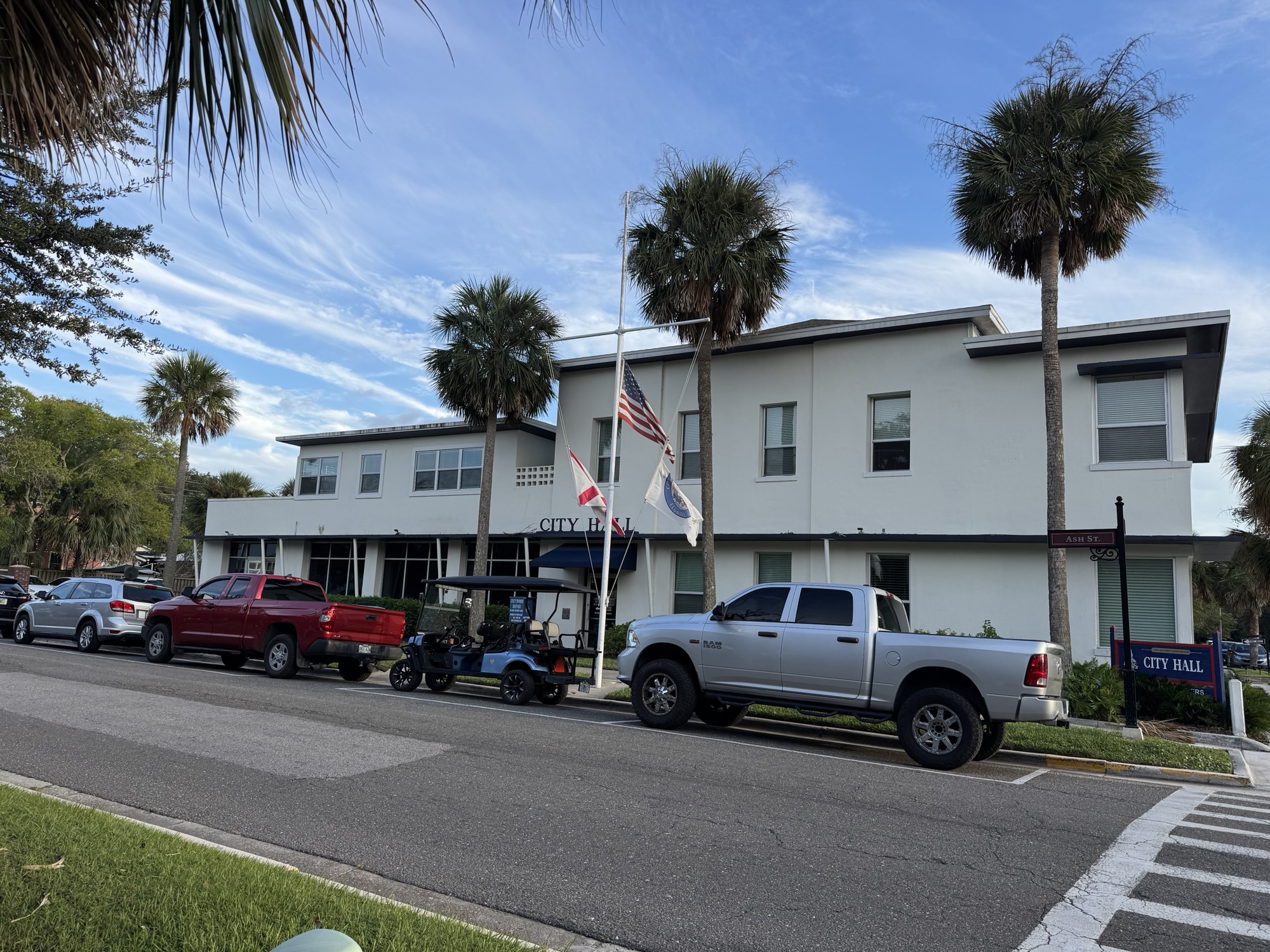
This afternoon, December 31, 2025, a Nassau County circuit judge is expected to rule on a key procedural challenge in the ongoing legal fight over downtown paid parking in Fernandina Beach. The hearing, before Marianne Aho, centers on the City’s motion to dismiss an injunction sought by Citizens Against Paid Parking.
While the paid parking debate itself is far from over, today’s decision matters because it determines whether the courts will pause the City’s legislative process—or step aside and let it continue.

Based on Florida law, the City’s position is strong.
What the Lawsuit Claims
Citizens Against Paid Parking filed suit seeking a temporary injunction to halt the City’s progress toward adopting a downtown paid parking ordinance. Among the claims raised are alleged impacts on free speech, religious activity, and downtown commerce.
Importantly, this lawsuit does not challenge a final ordinance. The paid parking measure is still in the legislative process, with second reading scheduled for January 6, 2026.
That distinction is central to today’s likely outcome.
Standing Problem: Is the Plaintiff a Legal Entity?
The City’s primary argument is procedural but fundamental: Citizens Against Paid Parking lacks legal standing.
Under long-established Florida common law, an unincorporated association cannot sue in its own name unless a statute expressly allows it. Courts have repeatedly held that, absent statutory authority, such groups are not legal entities capable of filing suit.
The City argues that Citizens Against Paid Parking is:
Not incorporated Not registered as a political committee (PAC) Not otherwise recognized as a legal entity under Florida law
If the court agrees, the case does not fail on the merits—it fails at the threshold. No standing means no lawsuit.
This alone is sufficient grounds for dismissal.
Courts Cannot Stop a Legislative Process Mid-Stream
Even if standing were assumed, Florida’s separation of powers doctrine presents another obstacle for the plaintiffs.
Florida courts are clear: judicial review applies to final legislative acts, not proposals still under consideration. The Florida Supreme Court has consistently held that courts should not interfere with legislative bodies while they are still deliberating.
Here, the paid parking ordinance has not yet been adopted. Second reading has not occurred. No final law exists.
As a result, the court is being asked to block a legislative process that is still underway—something Florida courts are generally unwilling, and often prohibited, to do.
Failure to Meet the Standard for a Temporary Injunction
Florida Rule of Civil Procedure 1.610 sets a high bar for temporary injunctions. A plaintiff must prove all four of the following:
A substantial likelihood of success on the merits Irreparable harm absent an injunction No adequate remedy at law That the injunction would serve the public interest
Based on the filings and arguments, the alleged harms cited—future business impacts, speculative interference with church access, or hypothetical speech restrictions—are forward-looking and uncertain.
Florida courts routinely reject injunctions based on speculative or contingent harm. Without a final ordinance, enforcement mechanism, or actual injury, irreparable harm is difficult to establish.
This is another reason the injunction is unlikely to survive.
Likely Outcome of Today’s Ruling
Taken together, the most probable outcome is:
• Dismissal of the injunction
• Possibly dismissal of the lawsuit entirely, or dismissal without prejudice
• The City proceeds to second reading on January 6, 2026
This would not be an endorsement of paid parking. It would simply mean the court declines to intervene prematurely.
What This Does Not Decide
Today’s ruling does not end the paid parking fight.
A voter referendum is already scheduled for August 2026, triggered earlier this year when opponents submitted more than the required number of verified signatures under the City Charter’s initiative process. The City Commission declined to adopt the proposed ban ordinance in October 2025, automatically sending the question to the ballot.
That referendum remains the ultimate check on paid parking.
Critical Question: What Happens If Paid Parking Starts Before the Vote?
Here is where expectations need to be realistic.
Based on the initiative language and Florida municipal practice:
A successful referendum would likely prohibit future paid parking programs It may not automatically dismantle a program already implemented unless the ballot language expressly requires repeal Additional legislative or administrative action could be required to unwind an existing system
In short, timing matters.
Bottom Line
Today’s court decision is about process, not policy.
If the injunction is dismissed—as Florida law strongly suggests—the City is free to continue its legislative path. The real decision will still be made by voters in August 2026.
Whether paid parking is a necessary management tool or a small-town misstep is a political question. The court’s role today is much narrower: determining whether it should intervene before the City has even finished legislating.
On that question, the answer is likely no.
This article was prepared with analytical assistance from AI. Legal conclusions are based on publicly available filings, Florida statutes, and controlling case law. It is not legal advice.