Opinion: Downtown Fernandina Will Never Build, Charge, or Profit Its Way Out of the Parking Problem
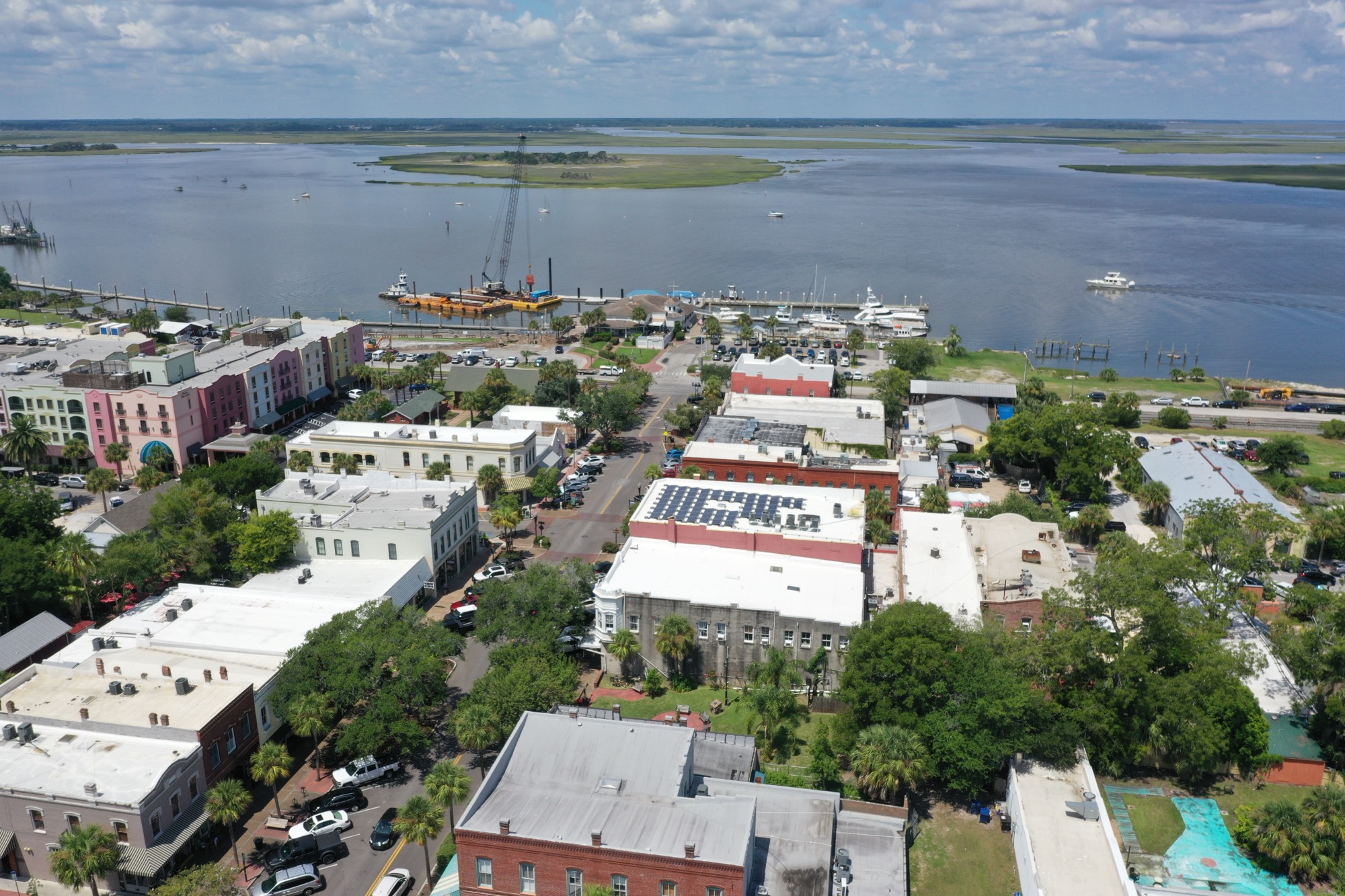
Fernandina Beach continues to chase the same illusions: build more parking, impose paid parking, or—more recently—treat parking as a revenue source. All three approaches fail for the same reason: they do not address the real problem. Downtown is a compact, historic district that cannot physically accommodate the volume of vehicles drawn by its success.

You cannot fix a structural imbalance with more asphalt, more meters, or more fees. And you certainly cannot fix it by turning parking into a revenue-generating enterprise.
The outcome is predictable, and Fernandina Beach is walking directly into it.
Why More Parking Can’t Solve the Issue
The fundamentals are unchanged:
Demand downtown is growing faster than supply. Every new restaurant, short-term rental, hotel, or event adds cars. Any new parking fills instantly. Physical constraints limit expansion to token gains.
The idea that downtown can “catch up” on parking is a political talking point, not a realistic plan.
Why Paid Parking Also Fails as a Solution
Paid parking is often sold as a cure that discourages unnecessary trips and “manages congestion.” The truth is more sobering:
1. Paid parking barely suppresses demand in a tourist town
Tourists pay and stay. Locals resent the system but still show up. The volume of cars doesn’t meaningfully decline.
2. It pushes vehicles into neighborhoods
People avoid fees. Employees move deeper into residential streets. Visitors circle for free spots. Congestion spreads outward.
3. A paid-parking system must grow every year to survive
Meters, enforcement, staffing, software, debt—these require rising revenue. If usage declines (the supposed goal), the program becomes financially unstable.
4. The city already admitted taxpayers will cover shortfalls
The moment taxpayer backing enters the picture, “paid parking” stops being a management tool and becomes a liability.
5. Paid parking monetizes scarcity; it doesn’t fix it
Fees do not create space. They do not expand the grid. They do not reduce peak loads. They simply charge people to experience the same shortage.
6. Paid parking attracts the very uses that worsen congestion
Higher-turnover, tourism-heavy businesses flourish under paid systems. Stable, everyday local use suffers.
The Public Needs to Understand the Core Principle: Parking Management Is Not About Revenue
This is the most important point that Fernandina Beach continues to mishandle.
Parking management exists to facilitate access — not generate revenue.
Any city that treats parking primarily as an income stream ends up distorting the purpose of the system and undermining public trust.
Revenue-driven parking creates bad incentives
When a city becomes reliant on parking income, the priority subtly shifts:
The goal becomes maximizing violations, not minimizing them. Rates creep upward to fill budget holes. Districts expand not due to need, but to capture more payers. Staff, contractors, and enforcement agencies depend on continued congestion.
A city that relies on parking revenue is a city motivated to keep the parking problem unsolved.
Access-driven parking has the opposite goal
Access-first systems aim to:
Help residents reach their own downtown. Support local businesses with reasonable turnover. Maintain fair use of limited spaces. Keep employees from occupying premium spots. Support tourism without destabilizing neighborhoods.
This is management—not monetization.
Cities that prioritize access build trust and strengthen downtown. Cities that prioritize revenue build resentment and bureaucracy.
Peak Events Make Both Paid and Free Systems Ineffective
Shrimp Festival, Dickens on Centre, Fourth of July, summer weekends—no fee structure or expansion can absorb these crowds. Planning for peak loading is fiscally irrational. These peaks will always overwhelm infrastructure.
That is why cities adopt remote lots, shuttles, and event-specific strategies, not permanent financialized parking schemes.
Why Fernandina Must Reject Revenue-Driven Models
Turning parking into a cash machine inevitably leads to:
Rate hikes Boundary expansion Heavy enforcement Reduced goodwill from residents A perception of downtown as a place of penalties, not welcome Budget reliance on a volatile and controversial revenue stream
And once government depends on that cash flow, unwinding the system becomes politically impossible—even when the public wants it gone.
A revenue-driven parking program is a trap. And Fernandina Beach is on the edge of walking into it.
Conclusion: Parking Policy Should Protect Access, Not Raise Money
Downtown Fernandina Beach will never build its way out of the parking problem. It will never charge its way out. And it will certainly never profit its way out.
The correct purpose of parking management is to ensure reasonable access to the district, not to pad the city budget. The moment the city treats parking as a revenue opportunity instead of a mobility tool, the public loses, businesses lose, and downtown becomes more difficult—not less—to navigate.
The only sustainable strategy is an access-first, demand-managed approach that acknowledges reality:
the problem is not free parking or insufficient revenue — it is too many cars for too small a district.
Until the city stops framing parking as a revenue stream and starts treating it as an access tool, the public will keep getting solutions that cost more, deliver less, and guarantee ongoing frustration.
Fernandina Beach deserves better than that.